Email Marketing Strategies Every Business Should Know
Introduction
In today’s digital world, businesses need effective ways to connect with their audience and build lasting customer relationships.
Email marketing is one of the most useful digital marketing methods for reaching customers directly with relevant content, updates, offers, and valuable information.
Email marketing helps businesses stay connected with their audience, increase engagement, drive website traffic, and support business growth.
When planned properly, it can become an important part of a successful digital marketing strategy.
In this blog, we will explore some of the most effective email marketing strategies, including building a quality email list, creating personalized campaigns, writing engaging subject lines, segmenting your audience, optimizing emails for mobile devices, and measuring campaign performance.
What Is Email Marketing?
Email marketing is a digital marketing method that allows businesses to communicate with customers and potential customers through email.
It can be used to share useful information, promote products or services, announce updates, and maintain regular communication with an audience.
Businesses can reach their customers by collecting email addresses through website signup forms, newsletters, contact forms, or other permission-based methods.
Once users subscribe, businesses can send relevant emails based on their interests, preferences, and interactions with the brand.
This makes email communication more targeted and personalized. Using effective email marketing strategies can help businesses deliver the right message to the right audience.
Promotional and Informative Emails
Email marketing generally includes both promotional and informative emails.
Promotional emails may include special offers, discounts, new products, services, or other business promotions.
Informative emails can include educational content, newsletters, helpful tips, industry updates, or company news.
A good email campaign should provide value rather than focus only on selling. Email marketing strategies that combine useful information with relevant promotional content can help businesses maintain audience interest and build stronger customer relationships.
Basic Goals of Email Marketing
The main goals of email marketing include:
Building and maintaining customer relationships
Increasing audience engagement
Promoting products and services
Generating website traffic and leads
Supporting sales and conversions
Keeping customers informed about business updates
Building long-term brand awareness
How Does Email Marketing Work?
Email marketing works through a series of steps that help businesses connect with the right audience, deliver useful content, and encourage customers to take action. From building an email list to tracking campaign performance, each step contributes to a successful email campaign.
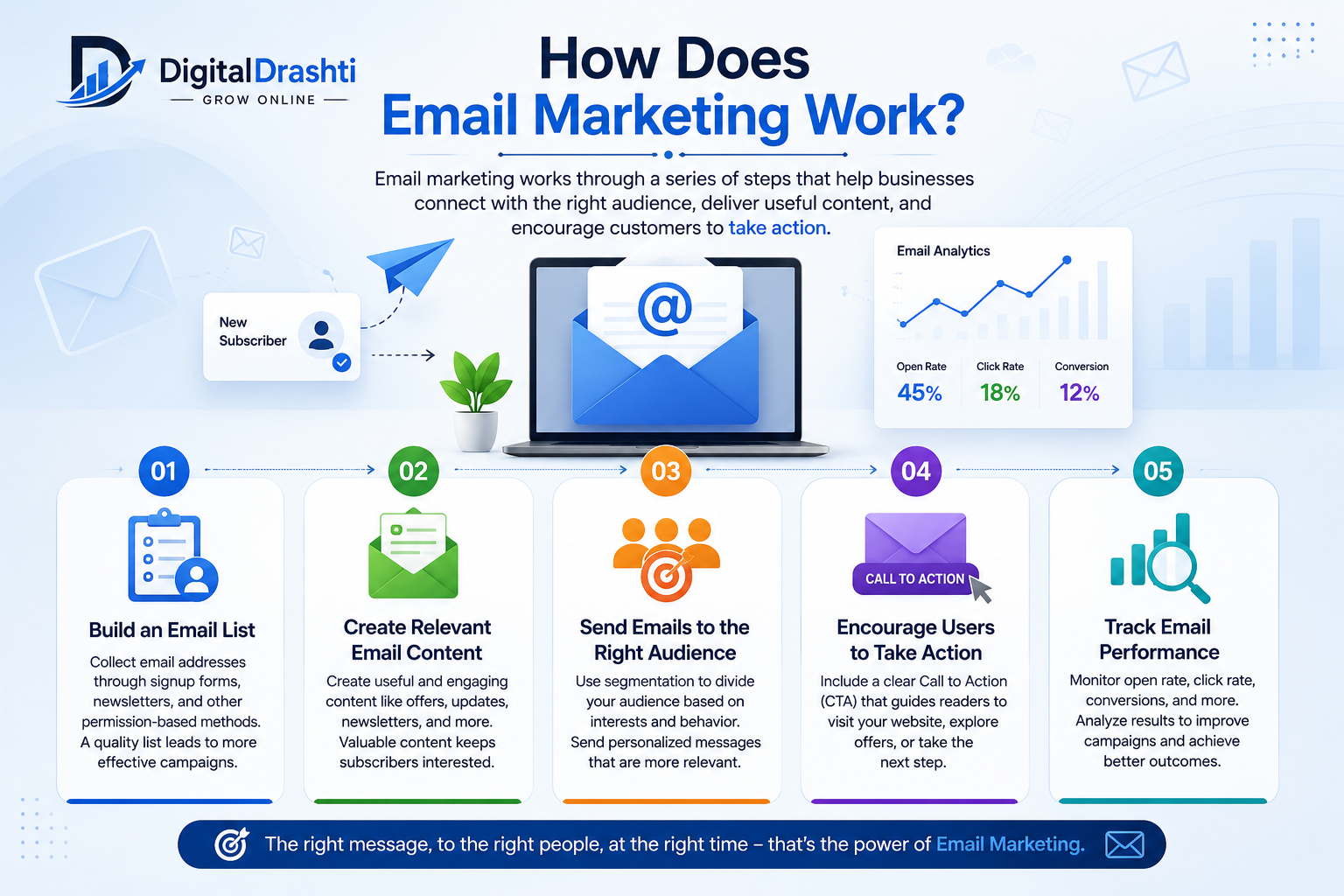
1. Build an Email List
The first step is to build a list of people who are genuinely interested in receiving communication from your business. Businesses can collect email addresses through website signup forms, newsletter subscriptions, contact forms, and other permission-based methods.
A quality email list is more valuable than a large list because it contains people who have willingly agreed to receive emails. This can help businesses create more effective and relevant campaigns.
2. Create Relevant Email Content
Once an email list is ready, businesses need to create content that is useful and relevant to their audience. Email content can include educational information, special offers, company updates, product announcements, and newsletters.
The content should provide value to readers instead of focusing only on promotion. Helpful and engaging content can encourage subscribers to continue opening and interacting with future emails.
3. Send Emails to the Right Audience
Sending the same email to everyone may not always produce the best results. Businesses can use audience segmentation to divide subscribers into different groups based on their interests, preferences, previous interactions, or customer behavior.
This allows businesses to send more relevant messages to different audiences and create personalized communication.
4. Encourage Users to Take Action
Every email should have a clear purpose and guide readers toward the next step. A Call to Action (CTA) can encourage subscribers to visit a website, read a blog, contact the business, explore a product or service, or take advantage of an offer.
A clear and relevant CTA makes it easier for readers to understand what they should do after reading the email.
5. Track Email Performance
Tracking campaign performance helps businesses understand how their audience responds to their emails. Important metrics include open rate, click-through rate, conversions, and unsubscribe rate.
By analyzing these metrics, businesses can identify what works well, improve future campaigns, and develop more effective email marketing strategies over time.
Why Is Email Marketing Important for Businesses?
Email marketing is an effective way for businesses to stay connected with their audience and support different marketing goals. With the right approach, businesses can use email to communicate with customers, build trust, promote their offerings, and encourage long-term engagement. Effective email marketing strategies can help businesses make these communications more relevant and useful.
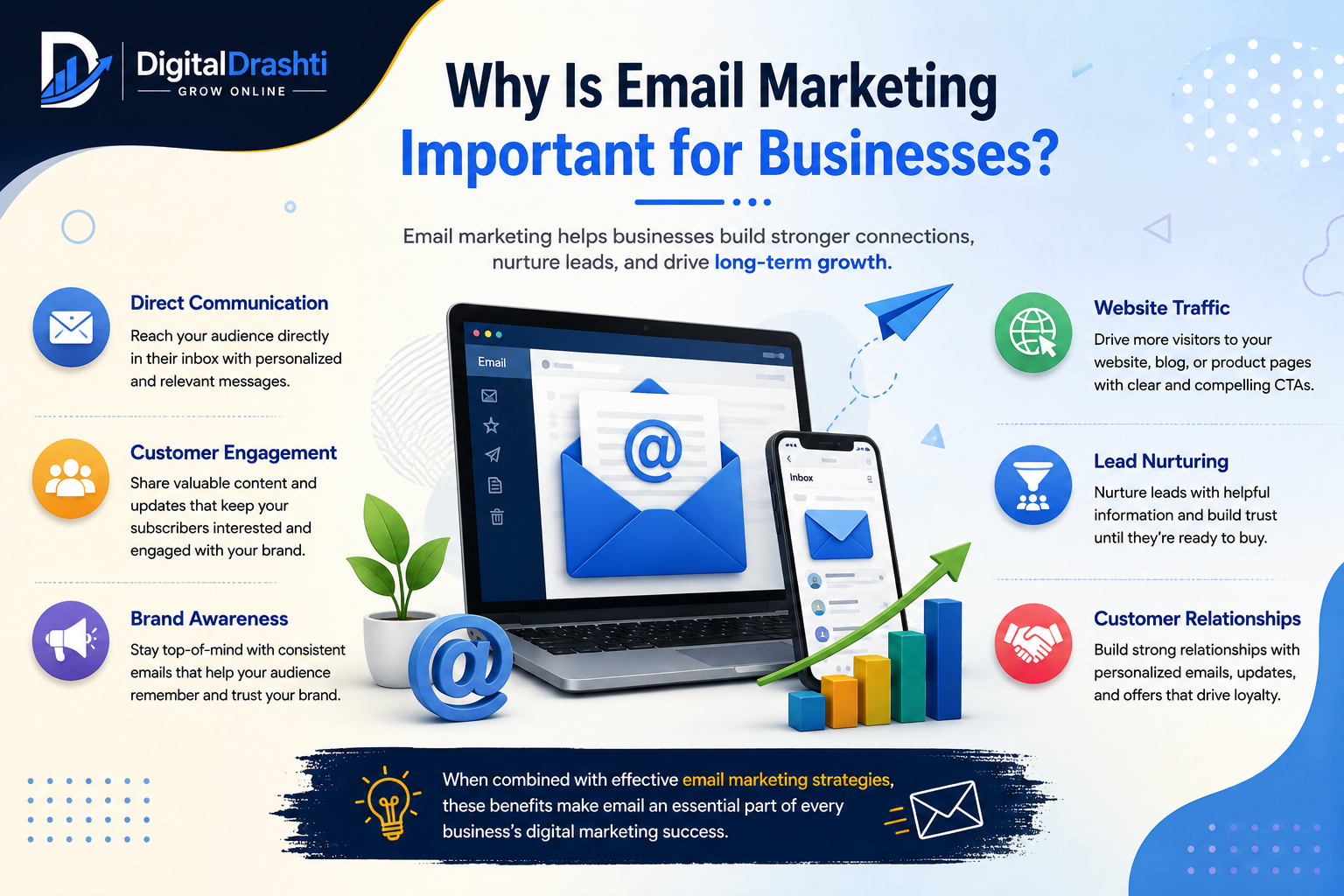
Email allows businesses to communicate directly with customers and potential customers. Instead of relying only on public platforms, businesses can deliver relevant messages directly to subscribers’ inboxes. This direct approach is one of the key advantages of email marketing strategies.
Regularly sharing useful and relevant content can keep customers engaged with a business. Newsletters, helpful tips, updates, and personalized messages can encourage subscribers to interact with the brand.
Consistent email communication helps businesses keep their brand in front of their audience. Sharing valuable content and updates can help customers become more familiar with the business and its offerings.
Emails can encourage subscribers to visit a business website, blog, landing page, or product page. A clear CTA can guide readers toward relevant pages and help increase website traffic.
Not every potential customer is ready to make a purchase immediately. Email can help businesses nurture leads by providing useful information, answering common questions, and gradually building trust with potential customers.
Email marketing can help businesses maintain ongoing relationships with existing customers. Personalized communication, useful updates, and relevant offers can make customers feel connected to the brand and encourage long-term relationships.
When combined with effective email marketing strategies, these benefits can make email an important part of a business’s overall digital marketing plan.
Email Marketing vs Traditional Marketing
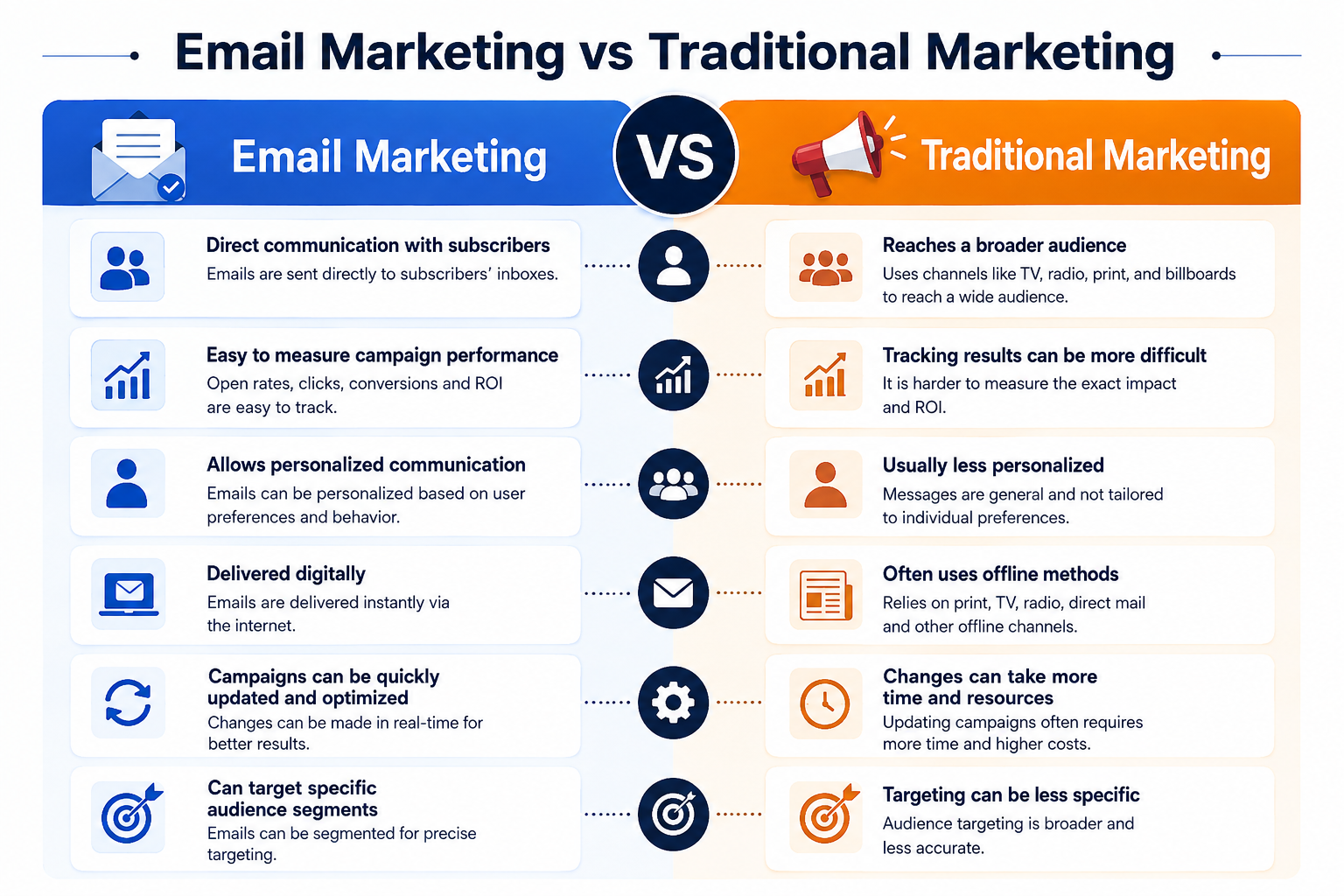
Email marketing and traditional marketing both help businesses reach their target audience, but they differ in how they communicate, measure results, and optimize campaigns. With the right email marketing strategies, businesses can create more targeted and measurable communication with their audience.
Common Email Marketing Mistakes to Avoid
Even with well-planned email marketing strategies, certain mistakes can reduce engagement and affect customer trust. Avoiding these common mistakes can help businesses create more effective email campaigns and maintain better relationships with their audience.
Sending Too Many Emails
Sending emails too frequently can overwhelm subscribers and may cause them to lose interest or unsubscribe. Businesses should maintain a reasonable email frequency and focus on sending relevant content. A balanced approach is an important part of effective email marketing strategies.
Using Misleading Subject Lines
A subject line should accurately represent the content of the email. Misleading or exaggerated subject lines may encourage initial opens but can reduce trust and negatively affect the customer relationship. Businesses should create clear, relevant, and honest subject lines.
Buying Email Lists
Buying email lists can result in sending emails to people who have not given permission to receive them. Businesses should build their own email lists using genuine, permission-based subscribers. This helps create a more engaged audience and supports better campaign results.
Ignoring Mobile Users
Many people read emails on smartphones and tablets. Emails that are difficult to read or interact with on smaller screens can lead to poor user experiences. Businesses should ensure their emails are mobile-friendly and easy to navigate.
Not Providing Valuable Content
Emails that focus only on selling may quickly lose the audience’s interest. Businesses should provide useful information, helpful resources, relevant updates, or offers that provide genuine value to subscribers. Providing consistent value is one of the most important email marketing strategies for maintaining long-term audience engagement.
Frequently asked questions