
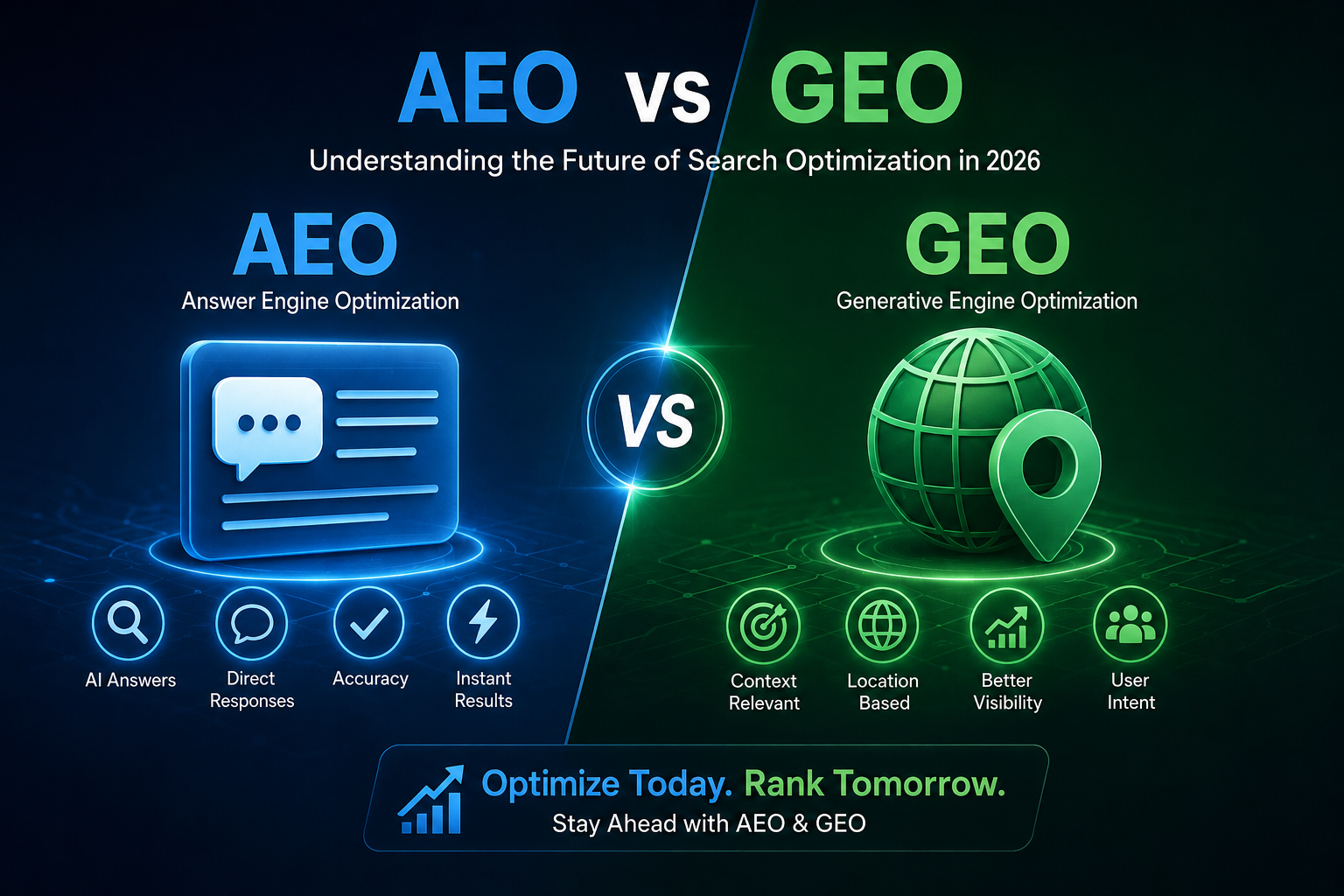
AEO vs GEO: Understanding the Future of Search Optimization in 2026
Introduction
Search technology has changed significantly over the past few years. Earlier, users mainly depended on search engines to find websites and manually explore different results. However, in 2026, the way people search for information is becoming more advanced with the rise of artificial intelligence and AI-powered search experiences.
Today, users expect quick, accurate, and direct answers instead of browsing multiple pages. This transformation has created new opportunities for businesses and marketers to improve their online visibility through modern optimization techniques.
AEO vs GEO Optimization has become an important topic in the digital marketing world because both strategies focus on improving how content appears in AI-driven search results. While Answer Engine Optimization helps content provide direct answers to user queries, Generative Engine Optimization focuses on making content understandable and valuable for AI-generated responses.
As search engines continue to evolve, businesses need to adapt their content strategies beyond traditional SEO. Understanding AEO vs GEO Optimization helps marketers prepare for the future of search and create content that meets changing user expectations.
What is AEO (Answer Engine Optimization)?
Answer Engine Optimization (AEO) is a modern search optimization approach that focuses on making content suitable for answer-based search results. Unlike traditional SEO, where the main goal is to rank a webpage on search engine result pages, AEO focuses on providing direct, accurate, and useful answers to users' questions.
Today, users often search through voice assistants, AI-powered search features, and question-based queries. Instead of typing short keywords, people are asking complete questions such as “What is the best digital marketing strategy for businesses?” or “How does AI search work?” AEO helps businesses structure their content in a way that search engines and AI systems can easily understand and display as answers.
The main purpose of AEO is to improve content visibility in featured snippets, voice search results, and AI-generated answers. This requires creating high-quality content that directly addresses user intent, provides clear explanations, and follows a well-organized structure.
Some important elements of AEO include:
In the discussion of AEO vs GEO Optimization, AEO plays an important role because it focuses on delivering specific answers to users. Businesses that implement AEO strategies can increase their chances of appearing in answer-focused search results and improve their online presence.
As search behavior continues to change in 2026, AEO has become an essential part of modern content strategies. Companies that understand AEO can create content that not only ranks better but also provides a better experience for users.
What is GEO (Generative Engine Optimization)?
Generative Engine Optimization (GEO) is an advanced search optimization strategy designed for AI-powered search engines and generative search platforms. Unlike traditional search methods that mainly provide a list of website links, generative search engines analyze information from multiple sources and create AI-generated responses for users.
GEO focuses on optimizing digital content so that artificial intelligence systems can easily understand, process, and use that information while generating answers. With the increasing popularity of AI tools and search experiences, businesses need to ensure their content is structured in a way that AI models can recognize as valuable, trustworthy, and relevant.
The main goal of GEO is not only to achieve higher rankings but also to increase the chances of being mentioned or included in AI-generated responses. This makes GEO an important strategy for brands that want to maintain visibility in the changing search environment.
Key elements of GEO include:
AEO vs GEO Optimization: Key Differences
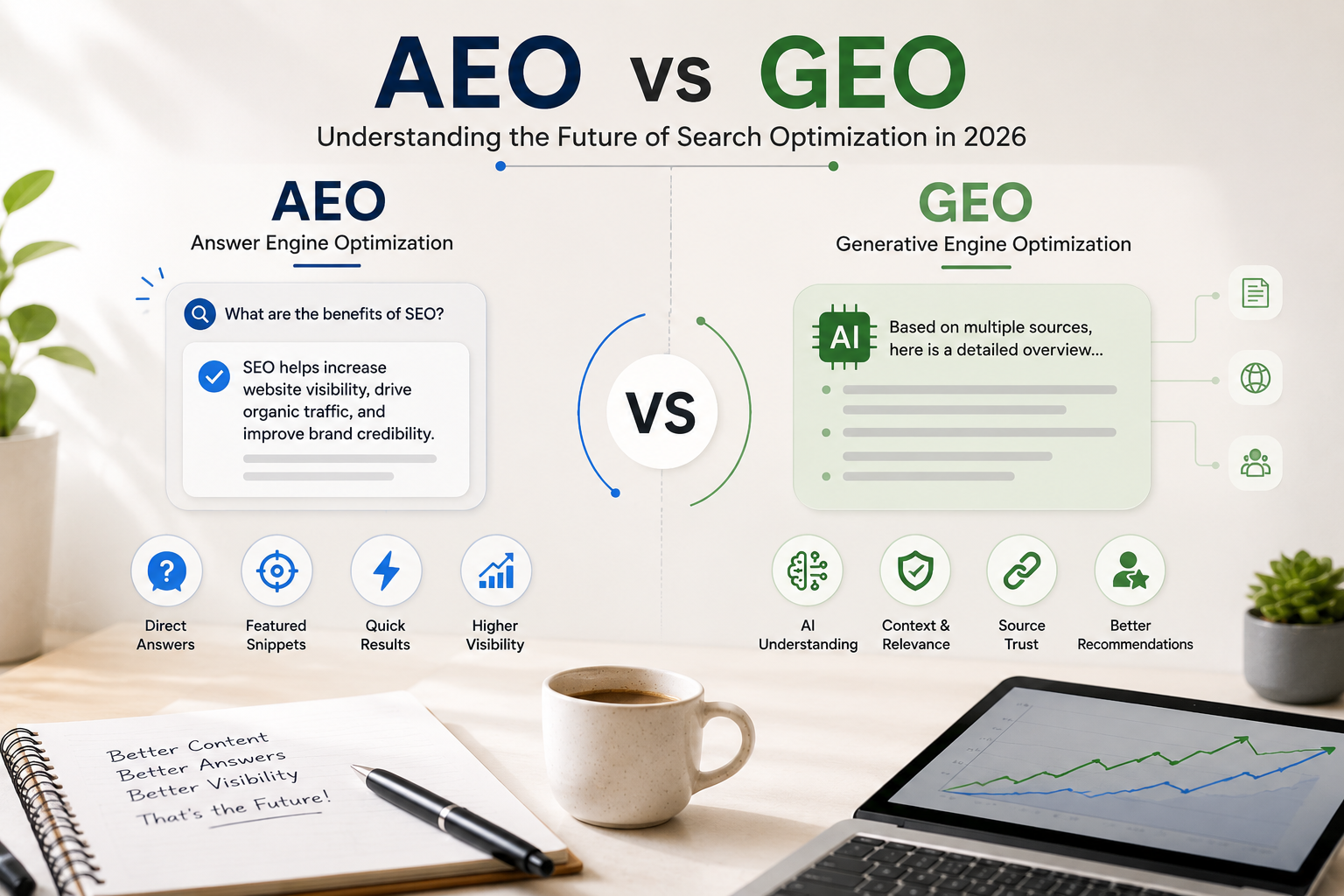
As search technology continues to evolve, businesses need to understand the difference between traditional search optimization methods and AI-focused strategies. Both AEO and GEO aim to improve content visibility, but their approaches and goals are different.
Understanding AEO vs GEO Optimization helps marketers create better content strategies that are aligned with how modern search engines and AI platforms work.
The biggest difference in AEO vs GEO Optimization is the way content is presented to users. AEO focuses on answering a particular question directly, while GEO focuses on helping AI systems understand and recommend content during generative search experiences.
For example, if a user searches “What are the benefits of SEO?” AEO helps a website provide a clear answer that can appear in search snippets. On the other hand, GEO helps ensure that AI-powered search tools understand the website’s information and consider it while generating a detailed response.
Both strategies are becoming important because search behavior is moving from simple keyword-based searches toward conversational and AI-powered experiences. Businesses cannot depend only on traditional SEO techniques anymore. They need a combination of strategies that improve both direct answers and AI visibility.
Implementing AEO vs GEO Optimization together allows brands to create content that works effectively across different search platforms. While AEO improves answer visibility, GEO prepares content for the next generation of AI-driven search.
How AEO and GEO Are Changing the Future of SEO in 2026
The world of search optimization is continuously changing with the growth of artificial intelligence, machine learning, and conversational search experiences. In 2026, businesses can no longer depend only on traditional SEO methods because users are searching for information in new ways. They expect faster answers, personalized results, and more meaningful interactions with search platforms.
This transformation has increased the importance of AEO vs GEO Optimization in modern digital marketing strategies. Both approaches are helping businesses adapt their content for AI-powered search systems and changing user behavior.
Traditional SEO mainly focuses on improving website rankings through keywords, backlinks, and technical optimization. However, AI-driven search requires content that can provide direct answers and deliver valuable information in a way that search engines and AI models can easily understand.
AEO is changing SEO by making content more focused on user questions and search intent. Businesses are now creating FAQ sections, conversational content, and answer-based pages to improve their chances of appearing in featured snippets and voice search results.
The combination of AEO vs GEO Optimization allows brands to improve their visibility across different search experiences. Instead of only targeting website rankings, businesses can focus on becoming a reliable source of information for both users and AI-powered platforms.
Why Businesses Need AEO vs GEO Optimization Strategies
The way people search for information has changed significantly, and businesses need to update their digital marketing strategies to match these changes. Users are no longer limited to traditional search engines; they are now using AI-powered platforms, voice assistants, and conversational search tools to find answers quickly.
This is why implementing AEO vs GEO Optimization strategies has become important for businesses that want to maintain their online visibility in 2026. These strategies help brands create content that is not only optimized for search engines but also understandable for AI systems.
Some major reasons why businesses should focus on AEO and GEO include:
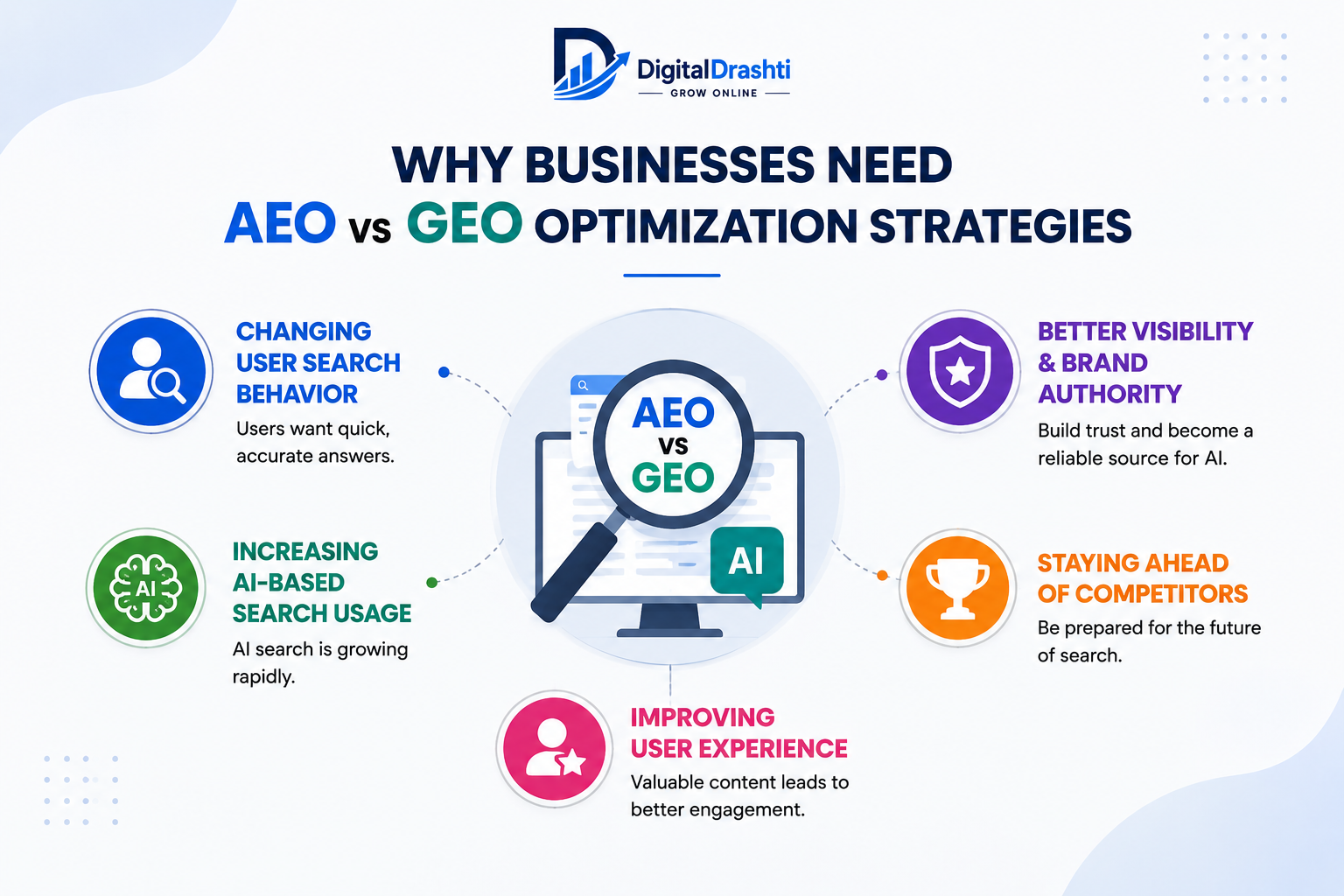
1. Changing User Search Behavior
Modern users prefer quick and accurate answers instead of spending time searching through multiple websites. AEO helps businesses provide direct answers, while GEO improves the chances of being included in AI-generated responses.
2. Increasing AI-Based Search Usage
AI-powered search experiences are becoming more common. Businesses that optimize their content for AI platforms can improve their chances of reaching potential customers through new search channels.
3. Better Visibility and Brand Authority
High-quality and informative content helps businesses build trust. When AI systems recognize a brand as a reliable information source, it can improve online visibility and credibility.
4. Staying Ahead of Competitors
Many businesses are still focusing only on traditional SEO. By adopting AEO vs GEO Optimization, companies can prepare for future search changes and create a competitive advantage.
5. Improving User Experience
Both AEO and GEO focus on providing valuable information to users. Clear, structured, and helpful content improves engagement and creates a better overall experience.
In the future of digital marketing, businesses that combine traditional SEO with AEO vs GEO Optimization strategies will have stronger opportunities to connect with audiences and improve their search presence.
How to Optimize Content for AEO and GEO
Creating content for modern search requires a different approach compared to traditional SEO. Businesses need to focus on making their content useful for both users and AI-powered search systems. A well-planned AEO vs GEO Optimization strategy helps websites improve their visibility in answer-based and generative search results.
Here are some important ways to optimize content for AEO and GEO:
1. Create Content Based on User Intent
Understanding what users are searching for is the first step toward successful optimization. Instead of only targeting keywords, businesses should focus on the questions, problems, and needs of their audience.
Content should provide clear solutions and answer common queries related to the topic. This helps AEO systems identify relevant answers and allows AI platforms to understand the overall context of the content.
1. Create Content Based on User Intent
Understanding what users are searching for is the first step toward successful optimization. Instead of only targeting keywords, businesses should focus on the questions, problems, and needs of their audience.
Content should provide clear solutions and answer common queries related to the topic. This helps AEO systems identify relevant answers and allows AI platforms to understand the overall context of the content.
1. Create Content Based on User Intent
Understanding what users are searching for is the first step toward successful optimization. Instead of only targeting keywords, businesses should focus on the questions, problems, and needs of their audience.
Content should provide clear solutions and answer common queries related to the topic. This helps AEO systems identify relevant answers and allows AI platforms to understand the overall context of the content.
2. Use Question-Based Content Structure
AEO works effectively when content is organized around real user questions. Adding FAQ sections, clear headings, and direct answers improves the chances of appearing in answer-focused search results.
For example, using headings like “What is AEO?” or “How does GEO work?” helps search engines and AI systems easily understand the information.
3. Improve Content Quality and Authority
GEO depends heavily on content reliability and expertise. AI-powered search engines prefer information that is accurate, detailed, and trustworthy.Businesses should focus on:
4. Optimize for Conversational Search
Users are increasingly searching through natural language. Content should include conversational phrases and long-tail keywords that match how people ask questions.
This approach supports both AEO and GEO because AI systems can better understand natural conversations.
5. Maintain Proper Content Structure
A clear structure improves readability for both users and AI tools. Using proper headings, short paragraphs, bullet points, and organized information makes content easier to analyze.
A complete AEO vs GEO Optimization approach requires combining helpful content, technical improvements, and user-focused strategies.
By implementing these techniques, businesses can prepare their websites for the future of search and improve their chances of appearing across traditional search engines and AI-powered platforms.
Future of Search Optimization Beyond 2026
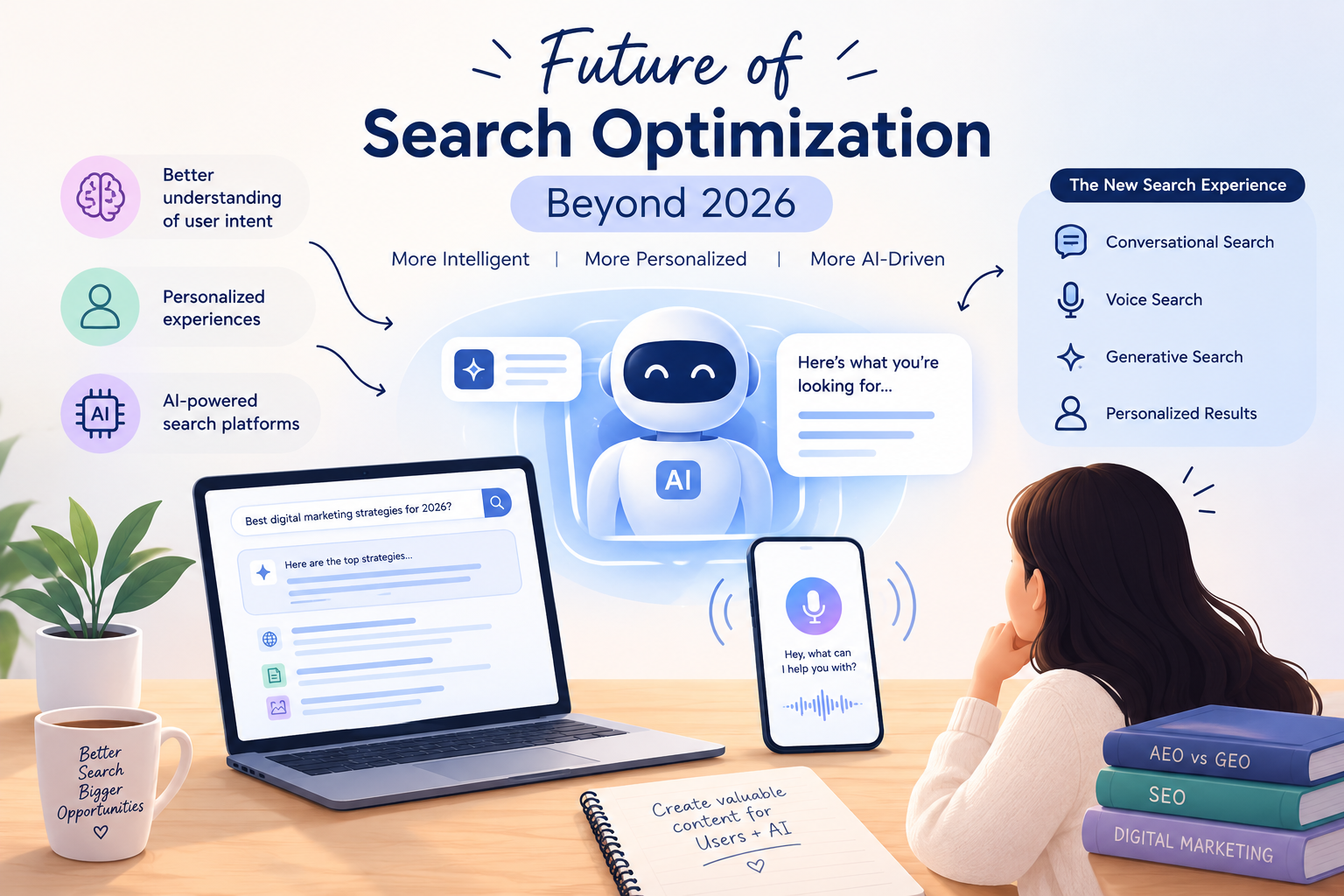
The future of search is moving toward a more intelligent, personalized, and AI-driven experience. As artificial intelligence continues to develop, search engines will become better at understanding user intent, context, and preferences. Businesses will need to focus on creating valuable content that helps both users and AI systems.
In the coming years, AEO vs GEO Optimization will play an important role in shaping how brands approach digital marketing. Search will no longer be limited to entering keywords and clicking website links. Instead, users will interact with AI-powered platforms that provide direct, detailed, and personalized responses.
One major trend in the future of search will be the growth of conversational search. People will ask more natural questions, and businesses will need to create content that matches these real conversations. This means content quality, relevance, and clarity will become more important than simply using keywords.
Voice search, AI assistants, and generative search experiences will continue to influence online behavior. Companies that adopt AEO vs GEO Optimization strategies early will be better prepared for these changes and can build stronger digital visibility.