
Home » Blogs » Web Development Services: A Complete Guide for Businesses in 2026 

Web Development Services: A Complete Guide for Businesses in 2026 

Web Development Services: A Complete Guide for Businesses in 2026 

Web Development Services: A Complete Guide for Businesses in 2026 

What Are Web Development Services? 

Web Development Services are professional solutions used to build, improve, and manage websites and web-based platforms.

 They cover the technical work required to turn a website idea into a working digital platform that visitors can access and use.The work can begin with understanding the business requirements and planning the website structure.

It may then include creating web pages, developing functionality, connecting databases, making the website mobile-friendly, testing different features, and maintaining the website after launch. 

Web Development Services help businesses create a website that is not only visually appealing but also functional, accessible, and suitable for their specific requirements.

Web Development usually refers to building and managing websites that people visit through a web browser. This can include business websites, blogs, portfolios, landing pages, and online stores. The focus is generally on creating web pages, organizing information, adding features, and making the website convenient to use.

Web Development has a wider scope. Along with standard websites, it can involve developing interactive web applications and online systems. Examples include customer portals, booking platforms, dashboards, online tools, and other browser-based applications that require more complex functionality.Simply put, website development can be considered one part of the broader field of web development.

Why Is Web Development Important for Businesses?

A business website often acts as an important digital touchpoint between a company and its potential customers.

When people search for a business online, a well-organized website can provide useful information about its products, services, contact details, and overall brand.

A professionally developed website can help a business present itself clearly and build a stronger online presence.

Professional Web Development Services can help create a website that works smoothly across different screen sizes. Since many users browse websites through smartphones and tablets, responsive functionality is an important part of modern website development.

A mobile-friendly website makes it easier for visitors to explore a business from different devices.A technically well-built website can also support other digital marketing activities such as SEO, content marketing, social media marketing, and online advertising.

When visitors can navigate the website easily and find relevant information quickly, it can create a more positive browsing experience.

Another advantage is flexibility. As a company expands, its website may need additional pages, features, integrations, or improvements. A properly planned website structure can make these future changes easier to manage without rebuilding everything from the beginning.

Types of Web Development Services
Types of Web Development Services

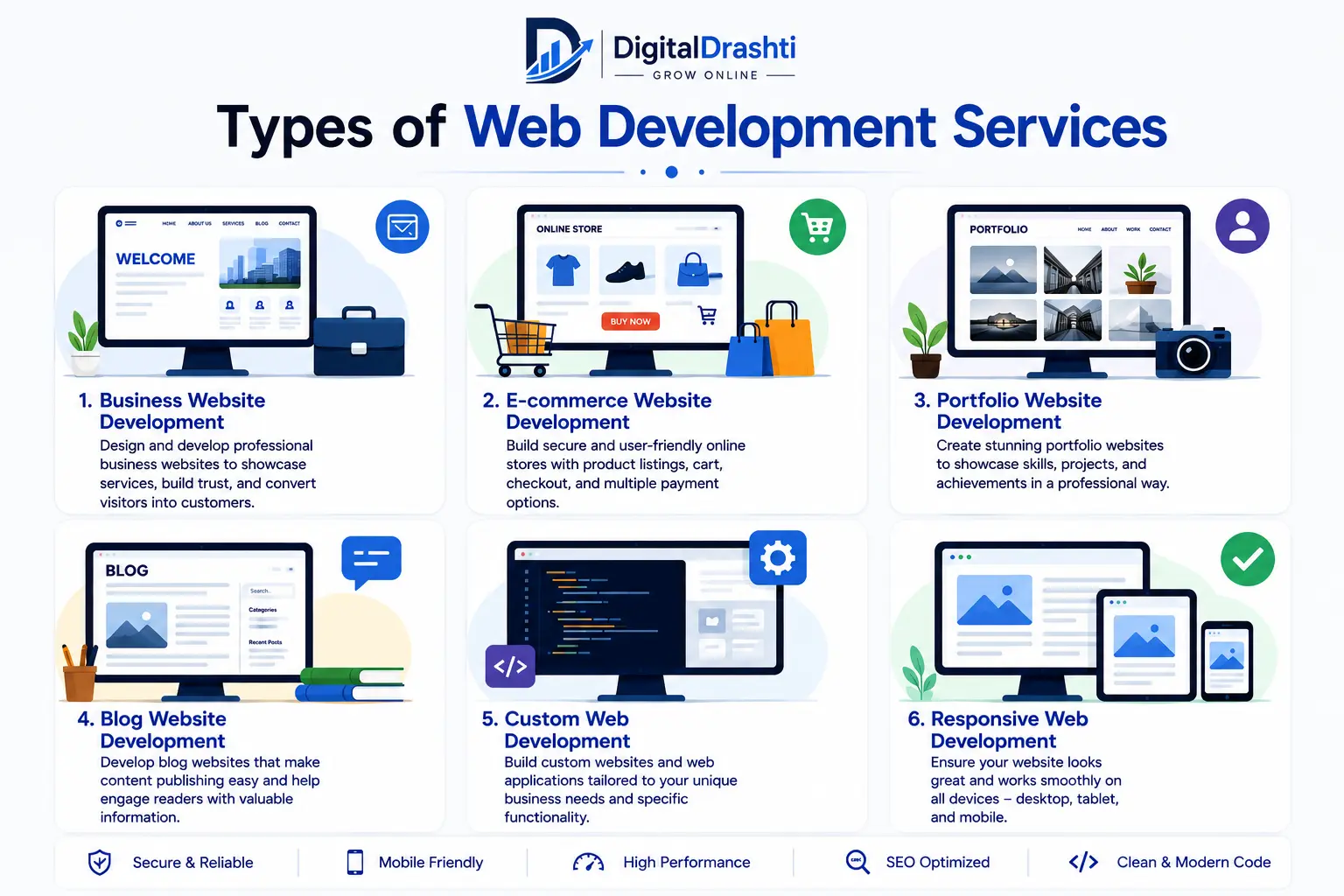
Businesses have different website requirements depending on their industry, target audience, and objectives. Some companies may need a simple informational website, while others may require an online store or a customized web platform. Therefore, Web Development Services can be adapted to different types of digital requirements.

Business Website Development

A business website is designed to introduce a company and provide visitors with important information about its products or services. It may include pages such as Home, About Us, Services, Portfolio, Blog, and Contact.

For small and growing businesses, a professional website can make it easier for potential customers to understand what the company offers. A well-organized business website can also provide contact options and guide visitors toward taking actions such as requesting information or making an enquiry.

E-commerce Website Development

E-commerce website development focuses on creating online stores where businesses can display and sell their products or services. These websites generally include product listings, categories, shopping carts, checkout pages, and payment options.

A well-developed online store should make it simple for customers to browse products, view important details, place orders, and complete purchases. Security, mobile compatibility, easy navigation, and smooth performance are also important considerations for an e-commerce website.

Portfolio Website Development

A portfolio website allows individuals, freelancers, professionals, or creative businesses to present their work online. It can showcase completed projects, skills, services, achievements, and professional information.

For service-based professionals, a portfolio can help potential clients understand their capabilities before making a decision. A clean layout, organized project presentation, and clear contact section can make the portfolio more useful and engaging.

Blog Website Development

Blog websites are created to publish and organize articles, guides, news, educational resources, and other forms of written content. Businesses can also use blogs as part of their content marketing and SEO strategy.

A properly developed blog should make it easy for visitors to find articles and for website owners to publish new content. Features such as categories, search functionality, author information, related posts, and mobile-friendly layouts can improve the overall reading experience.

Custom Web Development

Custom web development is suitable for businesses that require features beyond those available through standard website solutions. Instead of using a basic predefined structure, the website or web application is developed around specific business requirements.

Custom solutions may include customer dashboards, booking systems, membership platforms, calculators, internal tools, or other specialized features. This approach provides greater flexibility and allows businesses to create functionality that matches their particular workflow.

Responsive Web Development

Responsive web development focuses on making websites adapt properly to different screen sizes and devices. A responsive website should provide a consistent and convenient experience whether someone visits it from a desktop computer, tablet, or smartphone.

Since users access websites from a variety of devices, responsive design has become an important part of modern Web Development Services. Proper spacing, readable text, flexible layouts, optimized images, and touch-friendly elements can all contribute to a better mobile experience.

Web Development Process
Web Development Process

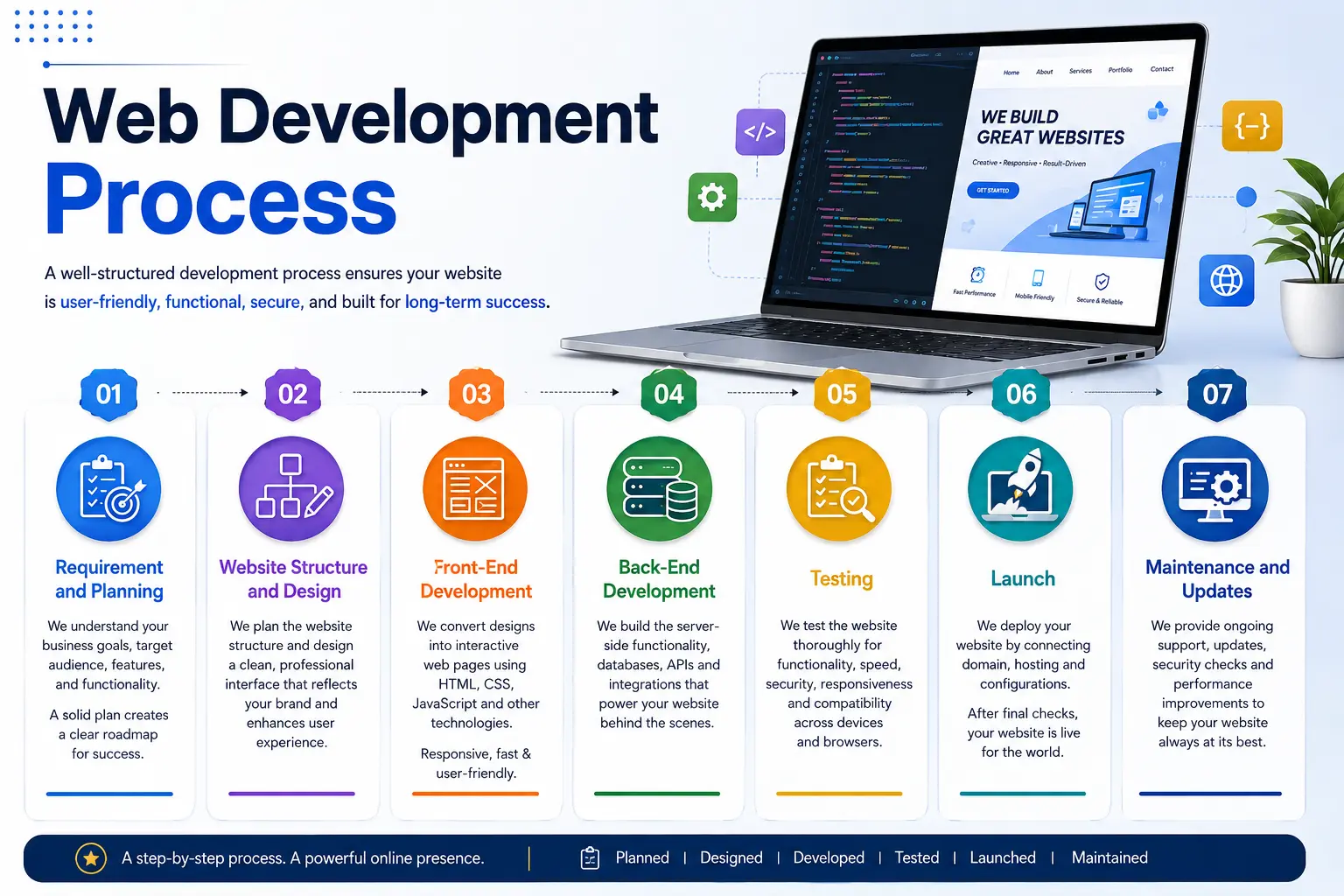
Creating a successful website involves more than simply designing a few web pages. A proper development process helps ensure that the final website meets business requirements, provides a smooth user experience, and works correctly across different devices. Professional Web Development Services generally follow a series of organized stages, from the initial idea to ongoing improvements after the website goes live.

1. Requirement and Planning

The first stage is understanding what the website needs to achieve. The development team gathers information about the business, target audience, services, website goals, required features, and expected functionality.
At this stage, important decisions are also made regarding the number of pages, content requirements, technology, timeline, and overall project scope. Proper planning creates a clear direction for the development work and helps avoid unnecessary changes later.

2. Website Structure and Design

Once the requirements are clear, the website structure and visual direction are planned. This includes deciding how pages will be organized and how visitors will move from one section to another.
The design stage focuses on elements such as layout, typography, images, navigation, buttons, spacing, and branding. The objective is to create an interface that looks professional while making information easy for visitors to understand and access.

3. Front-End Development

Front-end development converts the approved design into an interactive website that users can see and interact with in their browsers. Developers work on elements such as page layouts, menus, buttons, forms, animations, and other visual components.
Technologies such as HTML, CSS, and JavaScript are commonly used during this stage. The front end should also be designed to work properly on different screen sizes and browsers. A strong Web Development Services approach ensures that the visible parts of a website are both functional and user-friendly.

4. Back-End Development

Back-end development handles the technical functions that operate behind the website interface. It can involve server-side programming, databases, APIs, user accounts, data processing, and other functionality that visitors may not directly see.
For websites that require advanced features, the back end ensures that information is processed and stored correctly. For example, an online store may use back-end functionality to manage products, orders, customer information, and payments.

5. Testing

Before the website is made available to the public, it needs to be tested carefully. Testing helps identify technical problems and usability issues that could affect visitors.
Developers may check links, forms, navigation, page speed, responsiveness, browser compatibility, security-related aspects, and interactive features. Testing the website on different devices can also help identify problems that may not appear on a single screen size.

6. Launch

After development and testing are completed, the website is prepared for its public release. This stage can include connecting the domain, configuring hosting, uploading website files, setting up necessary integrations, and completing final checks.
Once everything is verified, the website becomes accessible to visitors. A successful launch is not necessarily the end of the development process; it is the point at which the website begins serving its actual audience. Reliable Web Development Services also consider important launch requirements to ensure the website is ready for real users.

7. Maintenance and Updates

Websites require ongoing attention even after launch. Regular maintenance can include updating content, fixing technical issues, improving security, checking website performance, and adding new functionality when required.
Businesses may also need to update their website as their services, products, or customer needs change. Continuous improvements can help keep the website useful, secure, and compatible with current technologies. Ongoing Web Development Services can support these updates and help maintain the website as the business grows.

Key Features of a Good Business Website

A business website should do more than simply display information. It should make it easy for visitors to explore the website, understand the business, and take the next step. A well-planned website combines performance, usability, security, search visibility, and visual quality. Professional Web Development Services can help bring these important elements together while creating a website that supports the needs of a business.

Key Features of a Good Business Website
  • Mobile-Friendly Design

A large number of users access websites through smartphones and tablets. Therefore, a business website should automatically adjust its layout according to the visitor’s screen size.
Text should remain readable, buttons should be easy to tap, images should fit properly, and visitors should not need to zoom or scroll horizontally. A responsive layout provides a smoother experience across mobile phones, tablets, laptops, and desktop computers. Responsive design is therefore an important part of modern Web Development Services.
  • Fast Loading Speed

Website speed can have a major effect on the user experience. If pages take too long to load, visitors may leave before exploring the content.
A well-developed website should use optimized images, efficient code, suitable hosting, and other performance practices to reduce unnecessary loading time. Faster pages can make navigation more convenient and help visitors access important information quickly. Performance optimization is an important consideration when selecting Web Development Services for a business website.
  • Easy Navigation

Visitors should be able to find the information they need without confusion. Clear menus, logical page organization, descriptive labels, and well-placed links can make a website easier to navigate.
For example, important pages such as Home, About, Services, Portfolio, Blog, and Contact should be easy to locate. Simple navigation helps users move through the website with less effort and creates a more comfortable browsing experience.
  • SEO-Friendly Structure

A website should be developed with search engine visibility in mind. A clear page structure, meaningful headings, descriptive URLs, optimized images, mobile responsiveness, and proper internal linking can support SEO efforts.
An SEO-friendly technical foundation also makes it easier for search engines to understand and index website content. When SEO considerations are included during development, Web Development Services can provide a stronger foundation for future digital marketing activities.
  • Secure Website

Security is another important consideration for any business website. A secure website helps protect the website, its data, and its visitors from common security risks.
Using HTTPS, keeping website software updated, applying strong passwords, using trusted plugins or integrations, and maintaining regular backups are some practices that can contribute to better website security. Security should be considered throughout the development process rather than only after the website is launched.
  • Clear Call-to-Action

A website should guide visitors toward the action that the business wants them to take. This could be Contact Us, Get a Quote, Book a Consultation, Request a Callback, or another relevant action.
Calls-to-action should be visible without making the website feel overcrowded. Clear and relevant CTA buttons can help visitors understand what to do next and make it easier for businesses to generate enquiries.
  • Professional Design

The visual appearance of a website influences how visitors perceive a business. A professional design should reflect the brand while keeping the website simple and easy to use.
Consistent colors, readable typography, high-quality visuals, balanced spacing, and a clean layout can create a more trustworthy and organized appearance. The design should support the content rather than distract visitors from it. A combination of attractive design and strong functionality is one of the key goals of quality Web Development Services.
By combining these elements, Web Development Services can help businesses create websites that are functional, accessible, secure, and easier to use. A strong website should balance appearance with performance so that it can serve both the business and its visitors effectively.
 

Frequently asked questions

1. What are web development services?

Web development services include designing, developing, testing, launching, and maintaining websites to meet a business’s online needs.

2. Why are web development services important for businesses?

Professional web development helps businesses build a strong online presence, improve user experience, and attract potential customers.

3. What types of websites can be developed for businesses?

Businesses can develop different types of websites, including business websites, e-commerce websites, portfolio websites, blog websites, custom websites, and responsive websites.

4. How long does it take to develop a website?

The development time depends on the website’s size, features, design, and functionality. A simple website may take a few weeks, while a complex website can take longer.

5. What is responsive web development?

Responsive web development ensures that a website works properly and provides a good user experience across desktops, tablets, and smartphones.

6. What is included in the web development process?

The process generally includes requirement planning, website structure and design, front-end development, back-end development, testing, launch, and ongoing maintenance.

7. How much do web development services cost?

The cost depends on the type of website, design requirements, features, functionality, and development time.

8. How can I choose the right web development service for my business?

Consider your business goals, target audience, required features, budget, scalability, and the experience of the web development service provider.

Leave a Comment

Your email address will not be published. Required fields are marked *

Scroll to Top