Content Marketing: Complete Guide, Strategy, Benefits & Examples (2026)
What is Content Marketing?
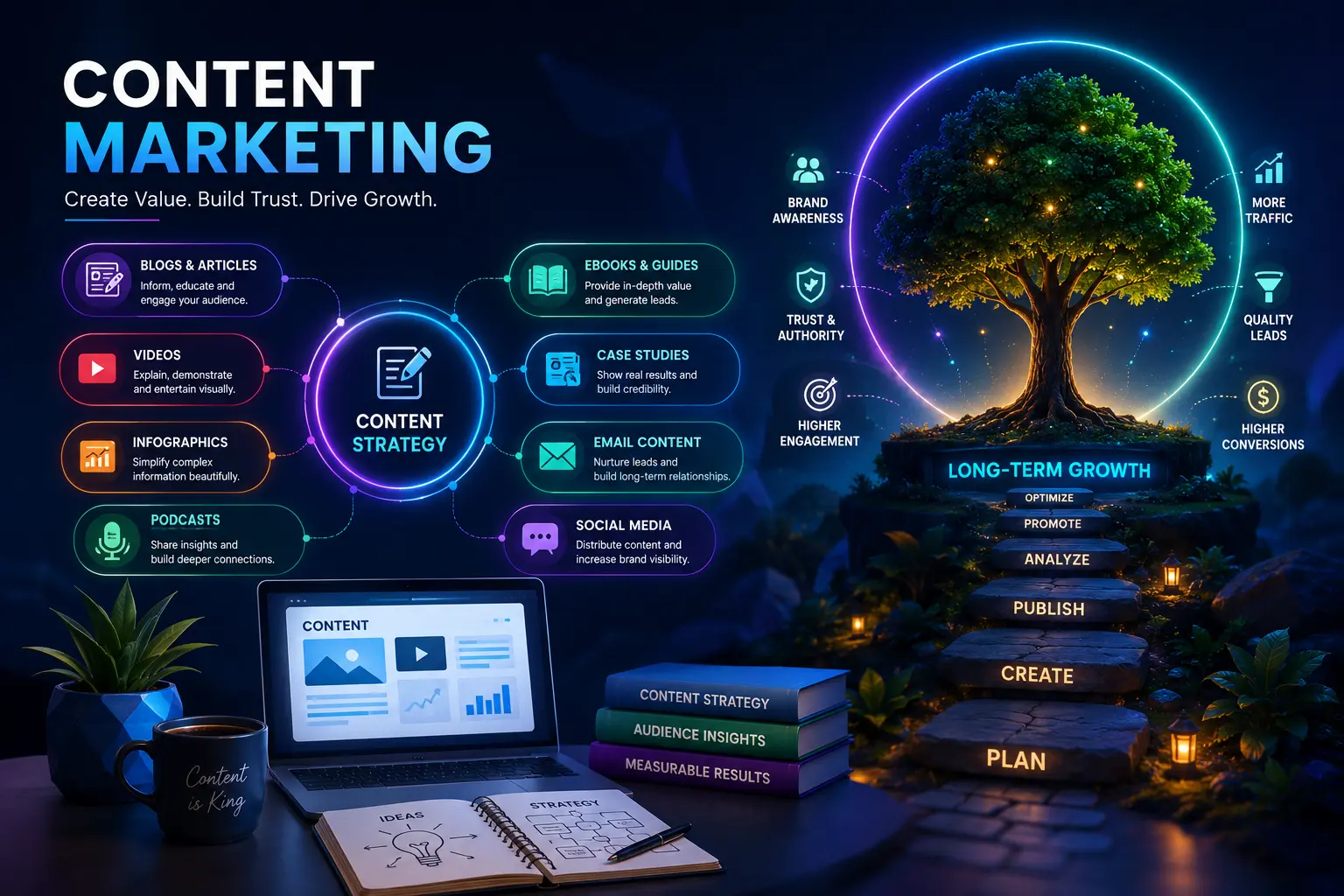
Content Marketing is a digital marketing strategy that focuses on creating and sharing valuable, relevant, and consistent content to attract, engage, and retain a specific audience.
Instead of directly promoting products or services, this approach helps businesses educate customers, answer their questions, and solve their problems through useful information.
The main objective is to build trust and establish long-term relationships with potential customers.
Businesses use blogs, articles, videos, infographics, podcasts, email newsletters, social media posts, and case studies to provide helpful information that matches the audience's needs.
When people consistently receive valuable insights from a brand, they are more likely to visit its website, interact with its content, and eventually become loyal customers.
How Does Content Marketing Work?
Content Marketing works through a structured process that focuses on delivering the right information to the right audience at the right time. The first step is understanding the target audience, including their interests, challenges, and search behavior.
This research helps businesses create content that answers real questions and provides meaningful solutions.
The next step is planning a content calendar and performing keyword research to identify topics that people are searching for online.
After planning, businesses create engaging blog posts, videos, guides, infographics, emails, or social media content that align with user intent and business objectives.
Once the content is published, it is optimized for search engines using relevant keywords, descriptive headings, internal links, and optimized images.
The content is then distributed through websites, social media platforms, email campaigns, and other digital channels to reach a wider audience.
Types of Content Marketing
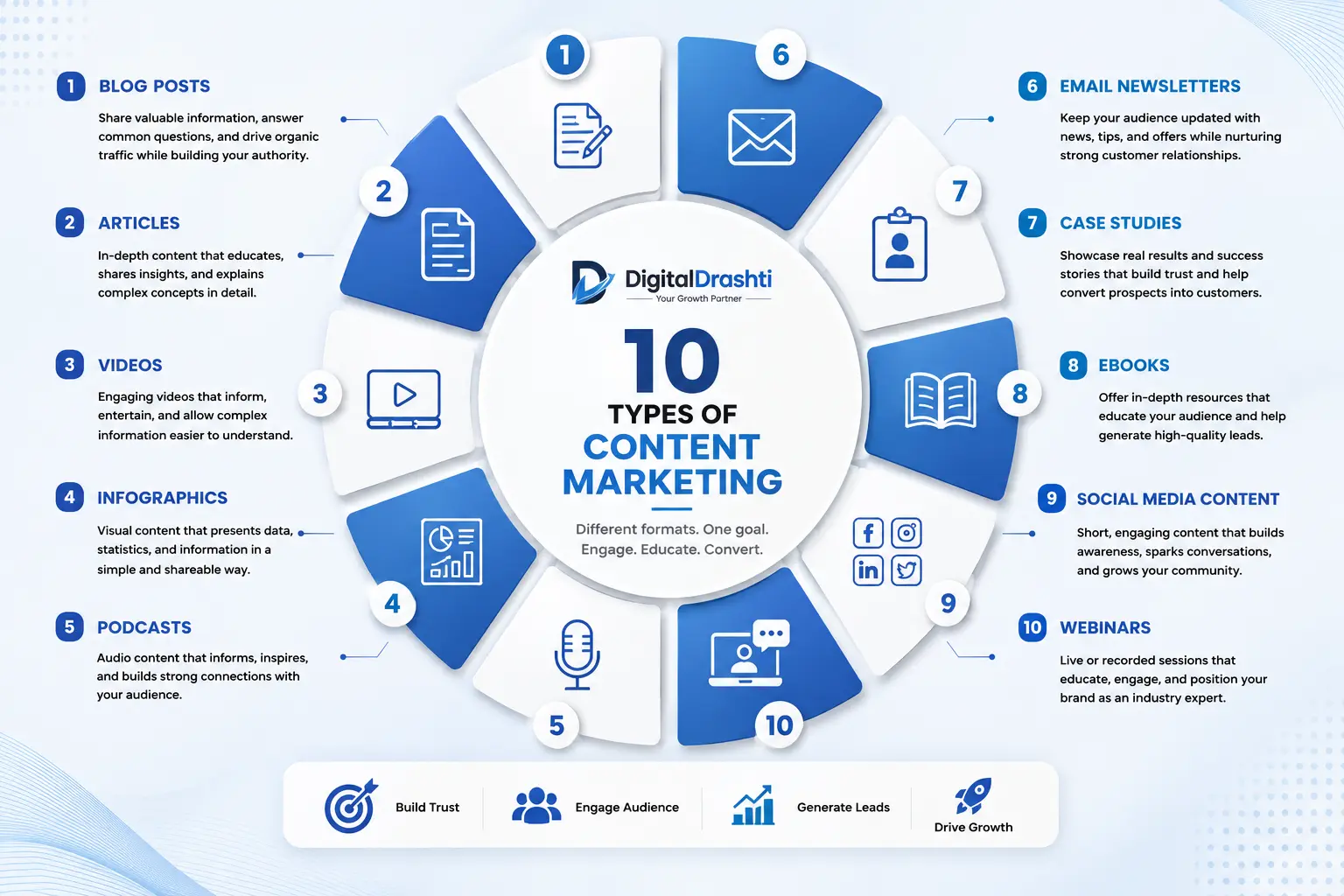
Every business has different goals and target audiences, so using a variety of content formats helps reach more people and improve engagement. Choosing the right format depends on your industry, audience preferences, and marketing objectives. Content Marketing includes several content types that work together to build brand awareness, generate leads, and increase customer engagement.
1. Blog Posts
Blog posts are one of the most popular and effective ways to share valuable information with your audience. They help answer common questions, solve customer problems, improve search engine rankings, and drive organic traffic. Regularly publishing informative blogs also establishes your business as an industry expert and encourages visitors to return to your website.
2. Articles
Articles provide in-depth information about specific topics and are often more detailed than standard blog posts. They are useful for educating readers, sharing industry insights, explaining complex concepts, and demonstrating expertise. Well-researched articles also improve credibility and support long-term SEO performance.
3. Videos
Video content has become one of the most engaging digital formats. Businesses use product demonstrations, tutorials, customer testimonials, educational videos, behind-the-scenes clips, and explainer videos to connect with their audience. Videos increase user engagement, improve retention, and make complex information easier to understand.
4. Infographics
Infographics present information using visuals, charts, icons, and simple text. They help explain statistics, processes, comparisons, and important data in an easy-to-understand format. Because they are visually appealing, infographics are highly shareable across websites and social media platforms.
5. Podcasts
Podcasts allow businesses to share valuable insights through audio content. Industry discussions, expert interviews, educational episodes, and business tips help audiences learn while commuting, working, or exercising. Podcasts also strengthen brand authority and build stronger relationships with listeners.
6. Email Newsletters
Email newsletters keep customers informed about company updates, new blog posts, product launches, special offers, and industry news. Regular communication helps maintain customer relationships, increase website visits, and encourage repeat business. Personalized email campaigns often improve engagement and conversion rates.
7. Case Studies
Case studies showcase real customer experiences and successful project outcomes. They explain the challenges faced by a client, the solutions implemented, and the measurable results achieved. These success stories build credibility, demonstrate expertise, and help potential customers make informed purchasing decisions.
8. eBooks
eBooks provide comprehensive information about a specific topic and are often offered as downloadable resources. Businesses use them to educate audiences, generate qualified leads, and demonstrate industry knowledge. Because they deliver detailed value, eBooks are commonly used in lead generation campaigns.
9. Social Media Content
Social media platforms help businesses interact with their audience in real time. Short posts, images, videos, stories, polls, reels, and carousels increase engagement while promoting brand awareness. Consistent posting also helps businesses build an active online community and strengthen customer relationships.
10. Webinars
Webinars are live or recorded online sessions where businesses educate their audience about specific topics. They often include presentations, product demonstrations, expert discussions, and question-and-answer sessions. Webinars provide valuable learning opportunities while helping businesses generate high-quality leads and establish thought leadership.
Why is Content Marketing Important?
Creating valuable and relevant content is one of the most effective ways for businesses to connect with their target audience. Instead of relying only on advertisements, companies can educate potential customers, answer their questions, and provide practical solutions through blogs, videos, guides, and other digital resources. Content Marketing helps brands build meaningful relationships with customers while supporting long-term business growth.
Benefits of Content Marketing
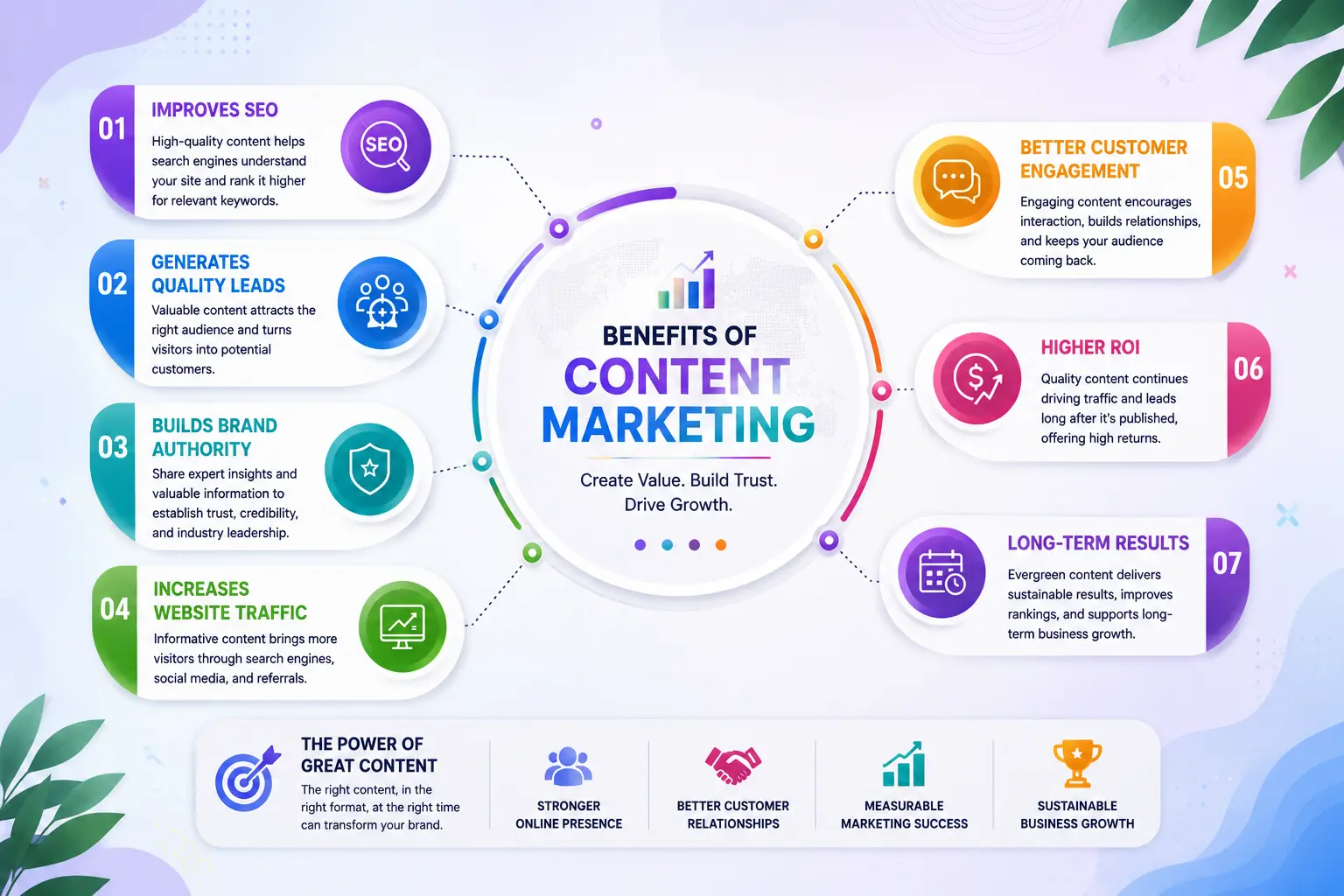
A well-planned content strategy helps businesses attract the right audience, improve online visibility, and build long-term customer relationships. Instead of focusing only on direct promotions, businesses can educate, inform, and guide potential customers through valuable resources. Content Marketing offers several long-term advantages that support sustainable business growth and strengthen a brand's digital presence.
1. Improves SEO
High-quality content helps search engines understand your website and rank it for relevant keywords. Optimized blogs, landing pages, and educational resources improve your site's visibility and authority over time.
Key SEO Benefits:
2. Generates Quality Leads
Visitors who find useful information are more likely to trust your business and become potential customers. Educational content encourages users to subscribe, contact your team, or request your services.
Best Practice: Focus on solving customer problems with informative content before promoting your products or services.
3. Builds Brand Authority
When businesses regularly publish expert content, customers begin to see them as reliable industry leaders.
You can build authority by:
4. Increases Website Traffic
Useful content continues attracting visitors long after it is published.
Sources of Traffic:
5. Better Customer Engagement
Strong engagement helps businesses build lasting relationships with their audience
Engagement Activities:
6. Higher ROI
Unlike paid advertisements, valuable content keeps generating results for months or even years
Why Content Delivers Better ROI:
7. Long-term Results
A single high-quality article can continue attracting visitors and generating leads for years when updated regularly.
Long-Term Advantages:
Content Marketing vs Digital Marketing
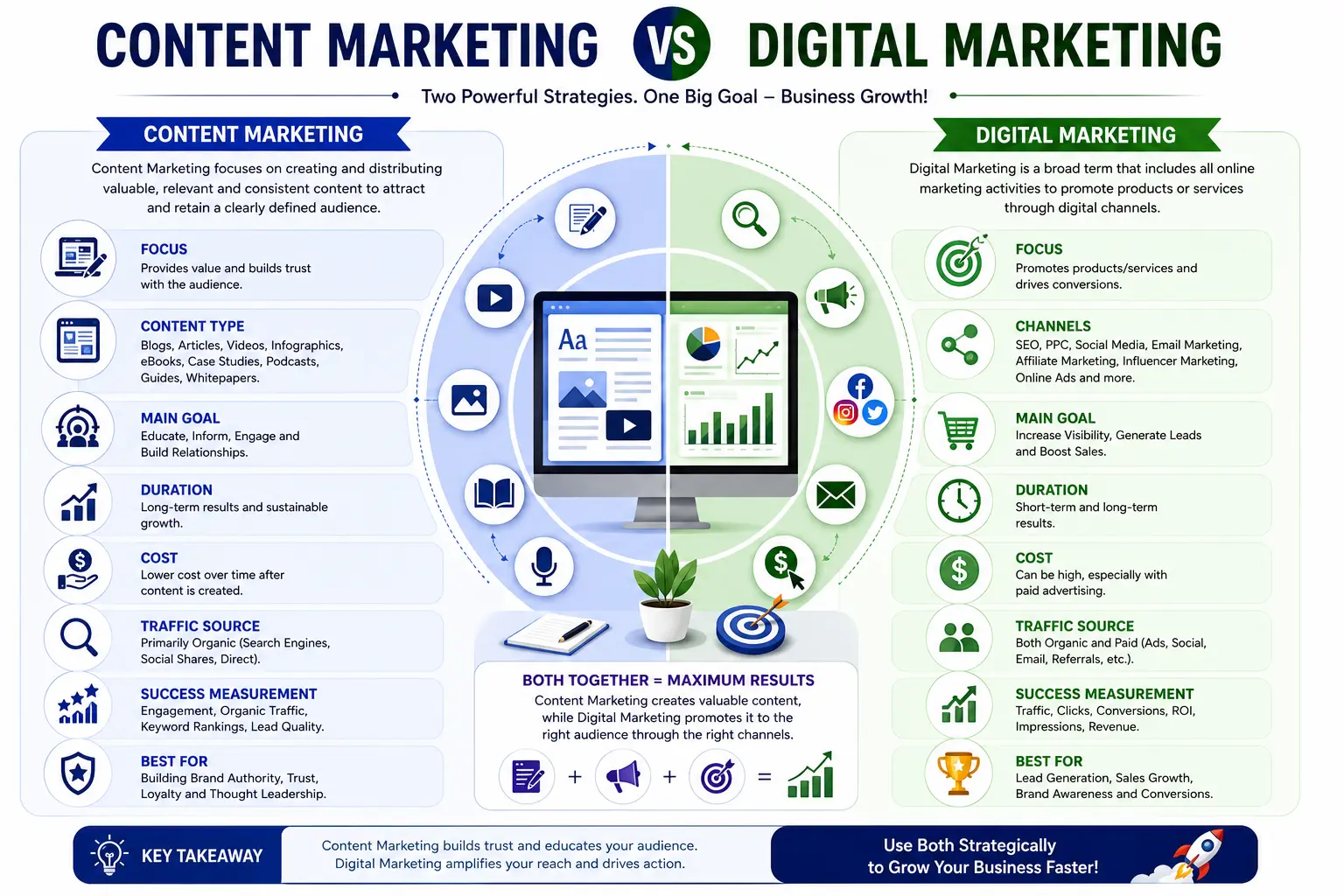
Content Marketing and Digital Marketing are closely connected, but they are not the same. Content Marketing focuses on creating valuable and informative content that educates, engages, and builds trust with the audience. Digital Marketing is a broader strategy that includes all online marketing channels such as SEO, PPC, Social Media, Email Marketing, and Content Marketing.
In simple words, Content Marketing is one important part of Digital Marketing, while Digital Marketing combines multiple techniques to increase brand visibility, generate leads, and drive business growth.