
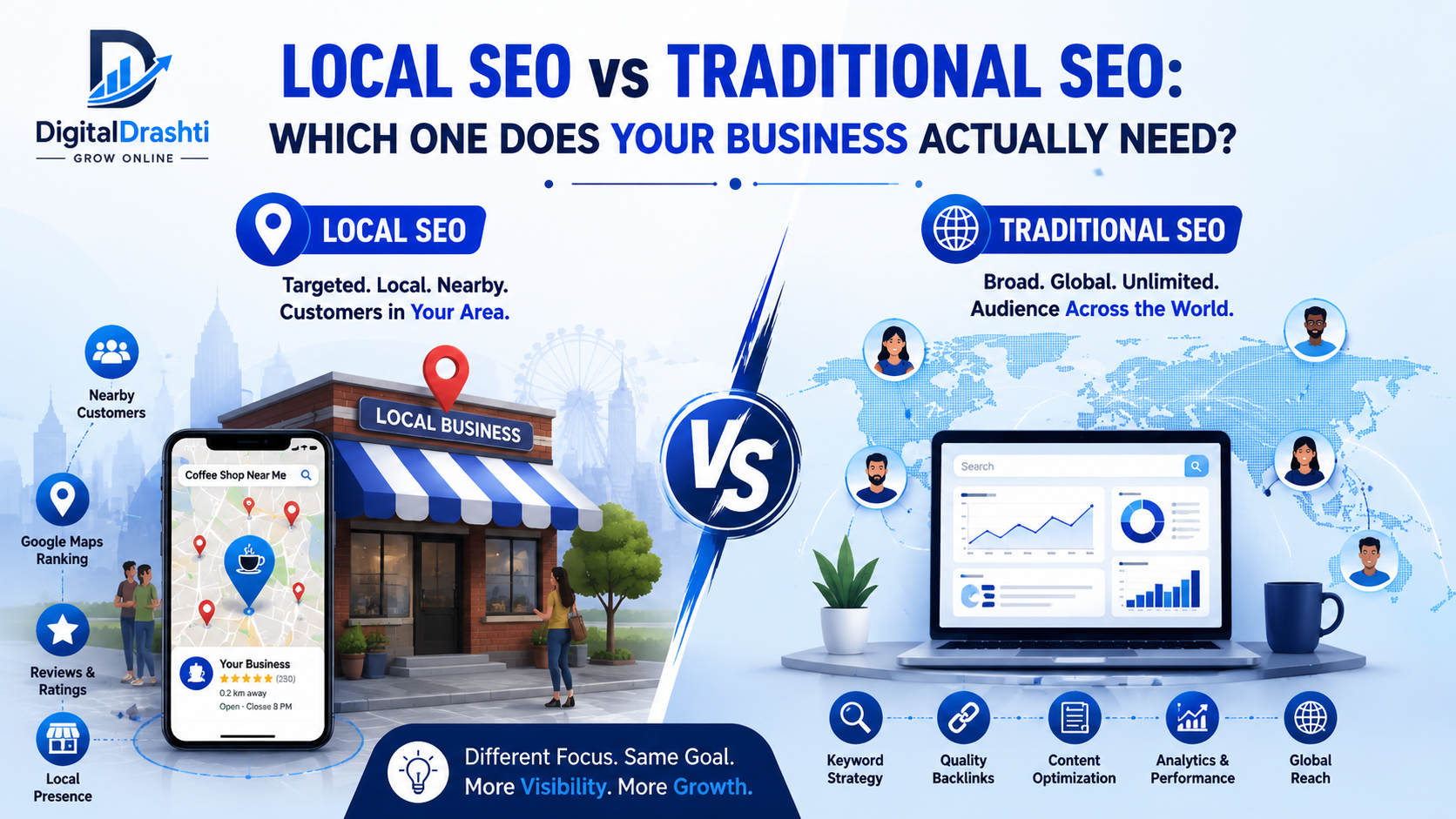
Local SEO vs Traditional SEO: Which One Does Your Business Actually Need?
Introduction
Search engines have become an important way for people to discover businesses, products, services, and information.
However, every business does not have the same audience or marketing goals.
A restaurant may want to attract customers from a nearby area, while an online store or software company may want to reach customers across different cities or countries.
This is where understanding local SEO vs traditional SEO becomes important.
Choosing the right SEO approach can help a business focus its time and resources on the people who are most likely to become customers.
Local SEO focuses on improving visibility for location-based searches, while traditional SEO focuses on broader organic search visibility.
In this guide, we will explain the difference between local SEO vs traditional SEO, how each approach works, which businesses can benefit from them, and how to decide whether your business needs one strategy or a combination of both.
What Is Local SEO?
Local SEO is a search engine optimization approach that helps businesses improve their visibility when people search for products or services within a specific geographic area.
It is especially useful for businesses that serve customers in a particular city, neighborhood, or service region.
For example, someone searching for “digital marketing agency in Surat,” “best salon near me,” or “dentist in Ahmedabad” is showing local search intent.
They are not simply looking for general information; they are looking for a business that can serve them in a specific location.
In local SEO vs traditional SEO, the main focus of local SEO is geographic relevance. The goal is to make it easier for potential customers in your target area to discover your business when they are actively searching for related products or services.
What Does Local SEO Focus On?
A local SEO strategy can include several important activities:
What Is Traditional SEO?
Traditional SEO, often referred to simply as SEO, is the process of improving a website so that it can appear more prominently in organic search results for relevant searches. Unlike local SEO, traditional SEO does not necessarily depend on a specific city or geographic area. It can help businesses reach people across a region, country, or even internationally.
For example, a person searching for “how to improve website traffic,” “best email marketing strategies,” or “what is technical SEO” may not care where the company providing the information is located. Their main goal is to find a useful and relevant answer.
In local SEO vs traditional SEO, traditional SEO focuses more on topic relevance, search intent, website quality, and organic visibility rather than primarily targeting a particular location.
What Does Traditional SEO Focus On?
A traditional SEO strategy can include several important areas:
Local SEO vs Traditional SEO — The Real Difference
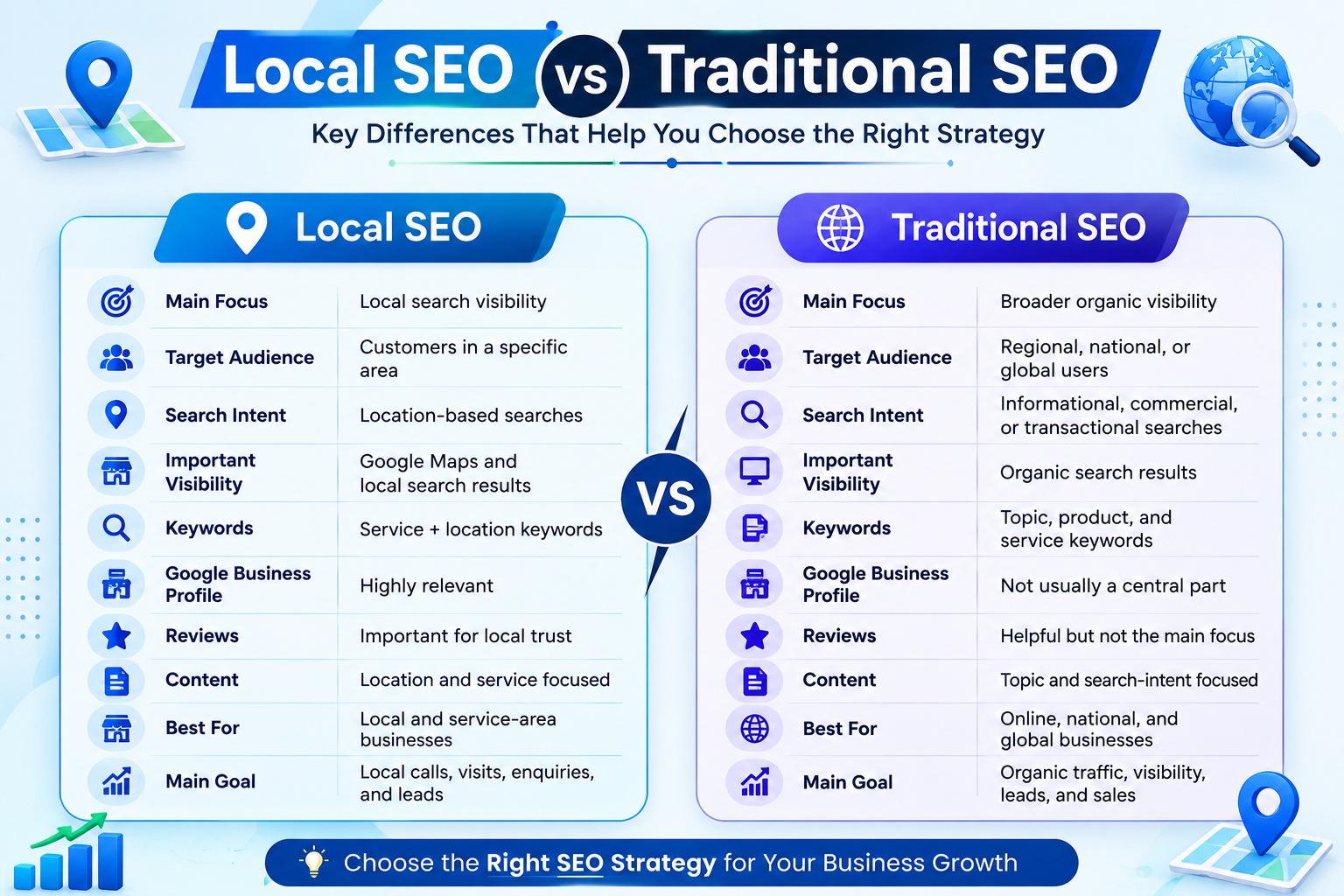
Now that we understand both approaches separately, the next step is to look at local SEO vs traditional SEO side by side. Although both aim to improve a website’s visibility in search engines, they target different types of searches and audiences.
The biggest difference is geographic intent. Local SEO is designed to connect a business with customers in a specific location, while traditional SEO focuses on reaching a broader audience based on topics, products, services, and search intent.
Local SEO is especially useful for businesses that serve customers in a particular city, area, or region. It helps improve a business’s visibility when people search for nearby services or products. Factors such as Google Business Profile optimization, customer reviews, local keywords, business information, and location-based content can influence local visibility.
Traditional SEO takes a broader approach. Instead of focusing mainly on a specific location, it aims to improve a website’s visibility for relevant searches across a wider audience. It usually involves areas such as keyword research, useful content, technical SEO, internal linking, website structure, and earning relevant backlinks.
How Local SEO Actually Works
Understanding the difference in local SEO vs traditional SEO is useful, but knowing how to apply local SEO is even more important. A successful local SEO strategy is not based on one single activity. It involves several connected steps that help search engines and potential customers understand what your business offers, where you operate, and who you serve.
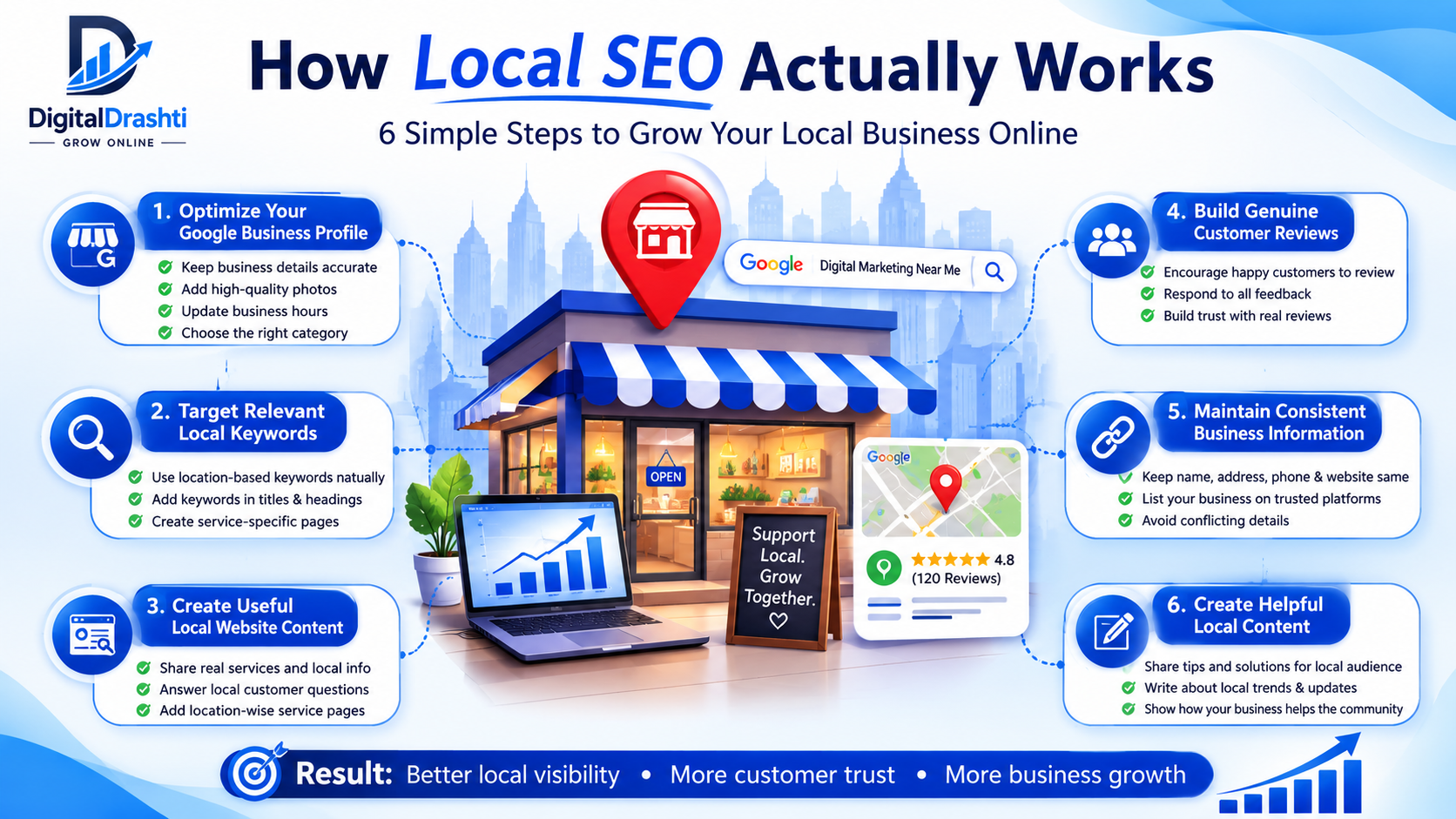
Step 1 — Optimize Your Google Business Profile
For eligible local businesses, a properly maintained Google Business Profile can be an important part of local search visibility.
Make sure your profile contains accurate and up-to-date information such as:
The information should accurately represent your real business. Avoid adding locations or services that you do not genuinely provide.
Step 2 — Target Relevant Local Keywords
The next step is identifying the phrases your local customers actually use when searching.
For example:
The goal is not to insert location keywords everywhere. Instead, use them naturally on relevant service pages, headings, page titles, and supporting content where they genuinely help the visitor.
Step 3 — Create Useful Local Website Content
Your website should clearly communicate your services and the areas you serve.
For example, a local agency could create a useful service page explaining:
Digital Marketing Services in Surat
The page should provide real information about the services, who they are suitable for, how the business works, and how customers can get in touch.
Simply creating multiple pages with the same content and changing only the city name does not provide much value.
Step 4 — Build Genuine Customer Reviews
Reviews can help potential customers evaluate a business before contacting or visiting it.
Encourage genuine customers to share their experience. Avoid buying reviews or creating fake feedback. Responding professionally to both positive and negative feedback can also demonstrate that the business values its customers.
Step 5 — Maintain Consistent Business Information
Your business details should be accurate and consistent wherever your business is legitimately listed online.Important information includes:
Consistency helps reduce confusion for both users and search engines.
Step 6 — Create Helpful Local Content
Finally, create content that answers questions your local audience actually has.
For example, a local digital marketing agency could publish content about:
How Traditional SEO Actually Works
While local SEO focuses strongly on geographic relevance, traditional SEO takes a broader approach to improving organic search visibility. Understanding this process is another important part of local SEO vs traditional SEO, because businesses targeting a wider audience need to optimize their website around topics, search intent, content quality, and overall website performance.
Traditional SEO is not one task. It is a combination of different activities that work together to make a website more useful for both search engines and visitors.
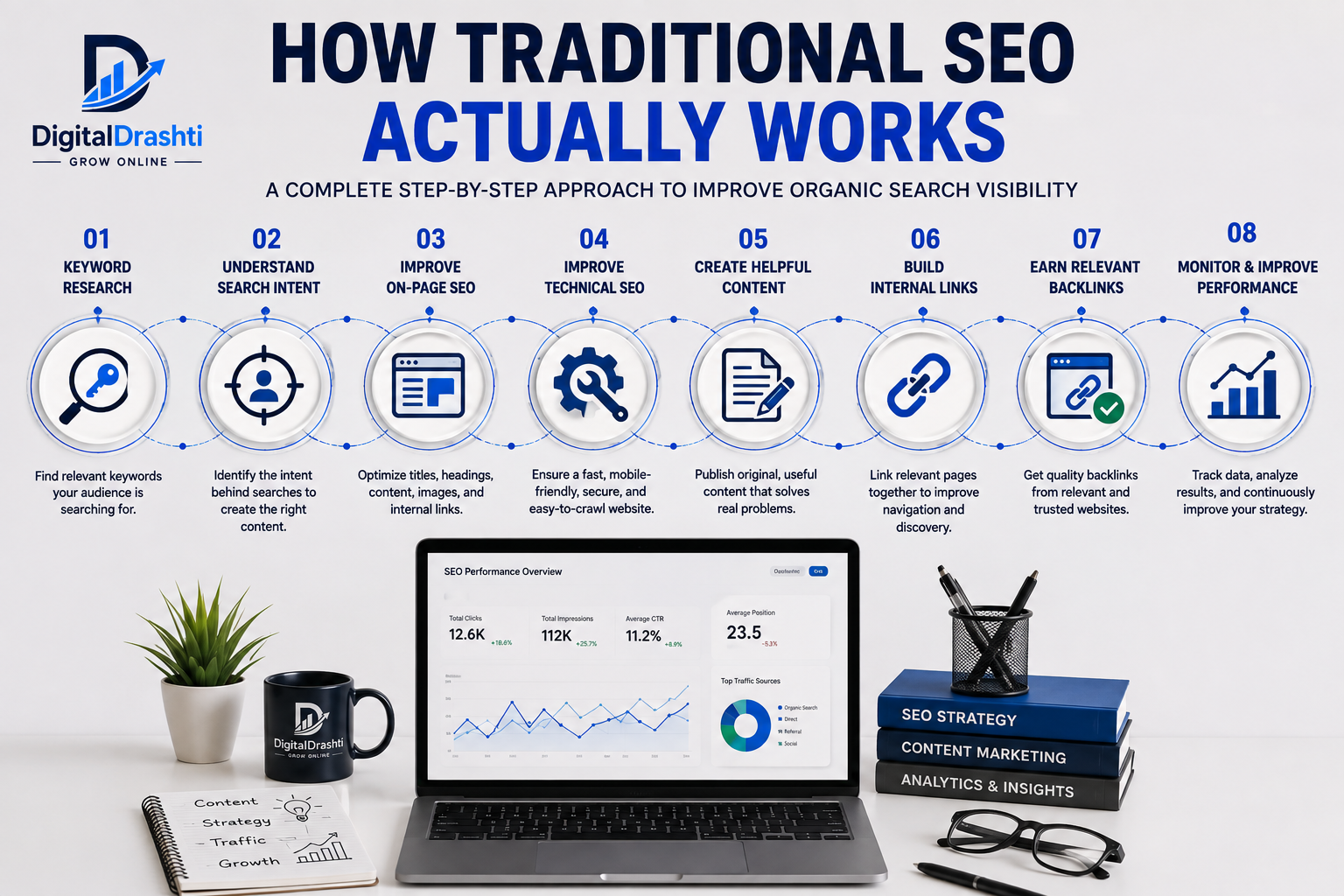
Step 1 — Conduct Keyword Research
The first step is finding out what your potential audience is searching for.
Instead of choosing keywords only because they have high search volume, look for keywords that are relevant to your products, services, and audience.
For example, a digital marketing website could target topics such as:
The goal is to identify searches that can attract people who are genuinely interested in what your business offers.
Step 2 — Understand Search Intent
After finding keywords, understand why people are searching for them.
Search intent can generally include:
Creating content that matches the searcher's intent makes the page more useful and relevant.
Step 3 — Improve On-Page SEO
On-page SEO involves optimizing elements that appear on your website.
Important areas include:
These elements should help visitors quickly understand what the page is about.
Step 4 — Improve Technical SEO
Technical SEO focuses on the parts of a website that affect how search engines crawl, understand, and access its pages.
Important areas include:
A technically healthy website provides a stronger foundation for SEO.
Step 5 — Create Helpful and Original Content
Content should answer real questions and provide information that visitors can use.
Instead of writing an article simply to include a keyword, build content around the problem the reader wants to solve.
For example, an article about how to increase website traffic should provide practical strategies rather than repeatedly mentioning the phrase “website traffic.”
Step 6 — Build Internal Links
Internal links connect relevant pages within your own website.
For example, a blog about SEO can naturally link to a related page about SEO services. This can help visitors discover additional information and make the website easier to navigate.
Step 7 — Earn Relevant Backlinks
Backlinks are links from other websites to your website. Quality and relevance matter more than simply collecting a large number of links.
A useful article, original research, valuable resource, or strong industry contribution can create opportunities for relevant websites to reference your content.
Step 8 — Monitor and Improve Performance
SEO should not be treated as a one-time activity. Monitor organic traffic, impressions, clicks, rankings, engagement, and conversions to understand what is working.
Based on the data, you can update existing content, improve underperforming pages, fix technical issues, and create new content around relevant opportunities.
This broader process shows why local SEO vs traditional SEO is ultimately about choosing an approach that matches your audience and business model rather than simply selecting one SEO checklist.
Which Businesses Need Local SEO?
Not every business needs the same level of local optimization. The most important factor is whether location influences the customer's decision. If your customers search for businesses, services, or products within a particular area, local SEO can become an important part of your marketing strategy.
When comparing local SEO vs traditional SEO, think about how your customers actually find your business rather than choosing a strategy simply because it is popular.
Businesses With a Physical Location
Businesses that customers visit in person can benefit significantly from local search visibility.
Examples include:
For these businesses, customers may search for nearby options before deciding where to visit. Being visible for relevant local searches can help potential customers discover important information such as location, services, hours, and contact details.
Service-Area Businesses
A business does not always need a storefront to benefit from local SEO.Some businesses travel to customers or provide services within a defined area.
Examples include:
For these businesses, clearly communicating the areas they genuinely serve can help connect their services with relevant local searches.
Businesses That Depend on Local Leads
Some businesses may receive customers through phone calls, enquiries, consultations, or appointments rather than direct online purchases.
Examples include:
For these businesses, the objective is not simply to generate website traffic. The more important goal may be generating qualified enquiries from people in the right service area.
Multi-Location Businesses
Businesses operating across several genuine locations may also need a strong local strategy.
For example, a business with branches in Surat, Ahmedabad, and Vadodara may need to make each location easy for customers to understand and find.
However, each location should have accurate information and meaningful content. Creating duplicate pages with only the city name changed is not a strong strategy.
For these businesses, customers may search for nearby options before deciding where to visit. Being visible for relevant local searches can help potential customers discover important information such as location, services, hours, and contact details.
When Local SEO May Not Be the Main Priority
If your business serves customers entirely online and does not depend on a specific geographic market, traditional SEO may deserve more attention.
For example, a SaaS company can sell its software to customers across different countries. An online course platform can attract learners from multiple locations. In these situations, restricting the SEO strategy to one city could unnecessarily limit the potential audience.
This is why local SEO vs traditional SEO should always be decided according to the business model, customer behavior, and actual service area.
Which Businesses Need Traditional SEO?
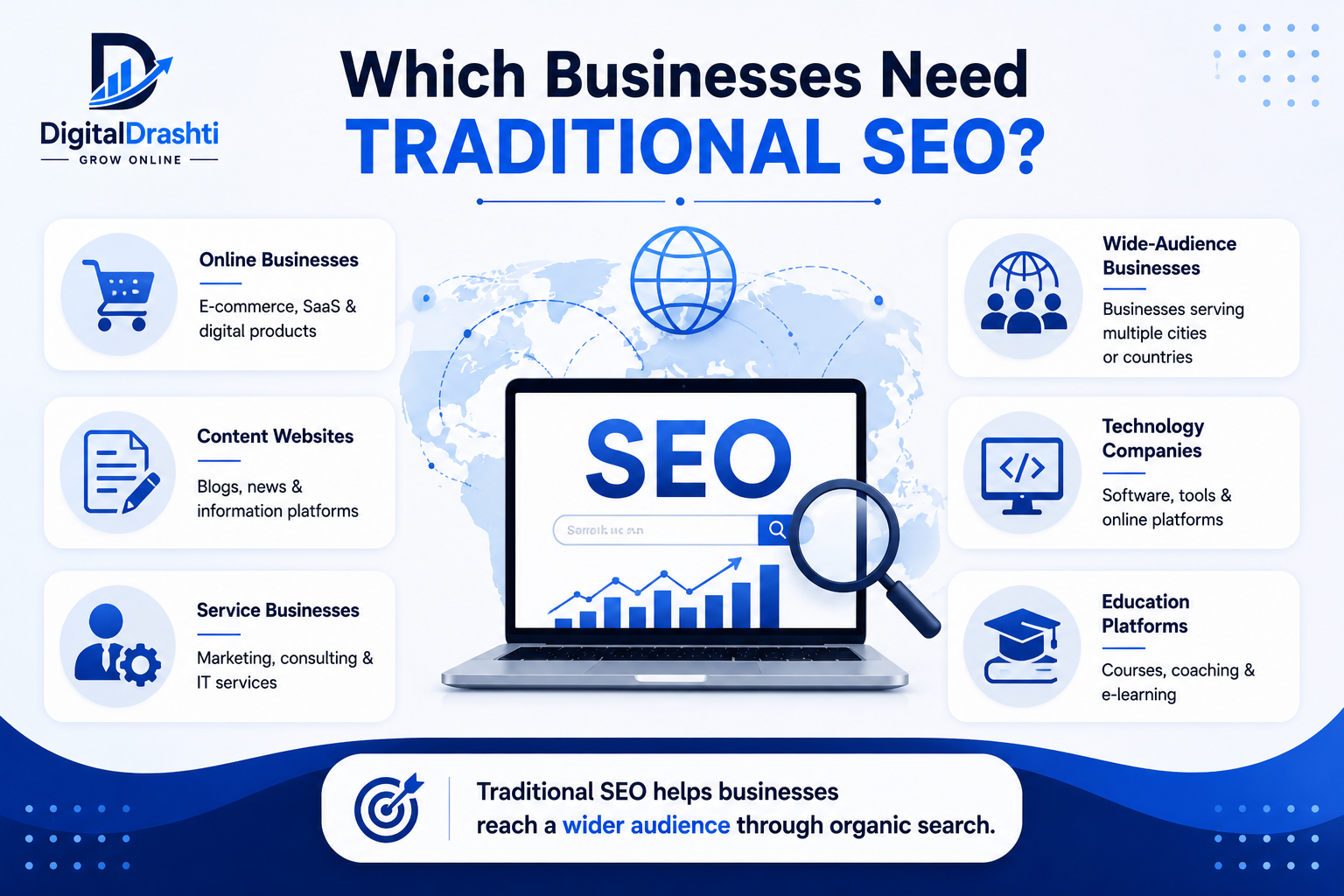
Traditional SEO is generally more useful when a business wants to reach people beyond one specific geographic area. If customers can discover, purchase, or use your products and services online from different locations, broader organic visibility can become an important growth channel.
In the local SEO vs traditional SEO comparison, traditional SEO is often the better starting point when location is not the main factor influencing a customer's decision.
E-commerce Businesses
E-commerce websites can benefit from traditional SEO because they can attract customers from different cities, states, or countries.
For example, an online store may target searches related to:
The focus is generally on helping users discover products and information through organic search rather than attracting customers to a particular physical location.
SaaS and Software Companies
Software businesses often serve customers across multiple locations.
A SaaS company may create content around topics such as:
These topics can attract users who are searching for solutions, regardless of where they live.
Online Education and Course Websites
Online courses, learning platforms, and educational websites can also benefit from traditional SEO.
For example, a website offering digital marketing courses could create useful content around:
The content can attract learners from different locations and introduce them to the website's courses or services.
National and International Businesses
Some businesses specifically want to reach customers across an entire country or multiple countries.
For these businesses, focusing too heavily on one city could restrict their potential audience. Traditional SEO allows them to build visibility around broader keywords, products, services, and topics.
For example, a company selling software throughout India may want to target searches relevant to businesses across the country rather than only optimizing for one city.
Content-Driven Websites and Publishers
Blogs, online publications, resource websites, and information-based platforms can also benefit from traditional SEO.
Their primary goal may be to attract readers who are searching for answers to specific questions. Creating comprehensive, useful, and well-organized content can help these websites reach a wider audience.
When Traditional SEO May Not Be Enough
A business that depends heavily on local customers should not assume that broad organic traffic will automatically generate local leads.
For example, a salon may receive thousands of visitors from different parts of the country, but visitors who live far away may not become customers.
This is an important lesson in local SEO vs traditional SEO: traffic should be relevant to the business, not simply large in volume.
The right strategy should therefore depend on where your customers are, what they search for, and how they purchase your products or services.